FARM Rio
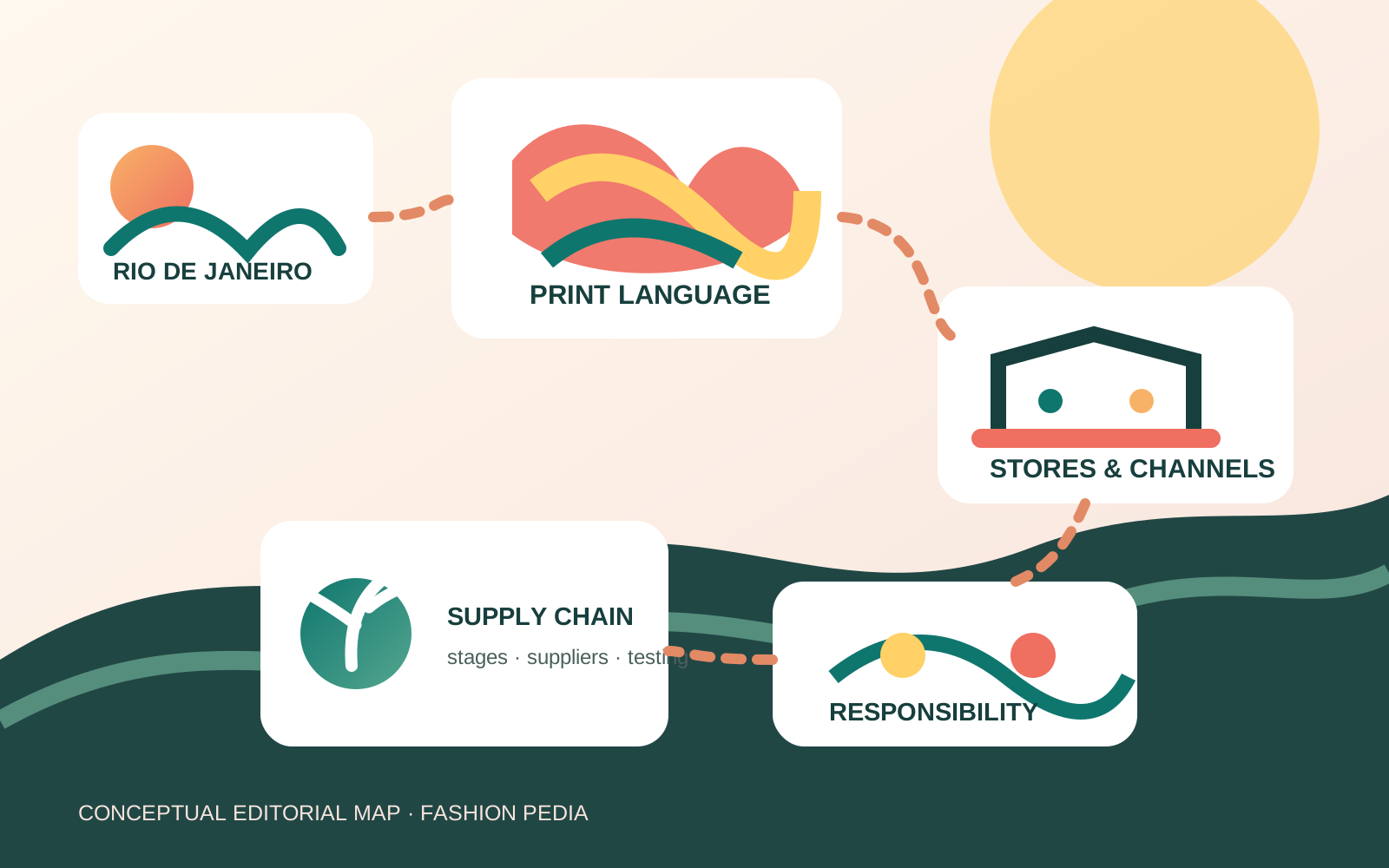
FARM Rio is a Brazilian fashion brand born in Rio de Janeiro in 1997. Its identity combines print creation, Carioca cultural references, and a business that expanded from the local market to Brazilian stores and international locations, while the brand publishes information about its supply chain and social and environmental commitments.
On this page
What is FARM Rio?
FARM Rio is a fashion brand born in Rio de Janeiro in 1997, according to its institutional presentation and Azzas 2154's corporate history. The brand describes itself as a group of Carioca creatives and builds its identity around prints, cultural references, and a way of dressing connected to Brazilian everyday life. This starting point makes the brand more than a product list: the products sit inside a visual and cultural language connected to Brazilian fashion and fashion retail.
The story began with Kátia Barros and Marcelo Bastos sharing creations at a small booth in an independent fashion market. Azzas 2154's timeline also records 1997 as FARM's founding year. Reading these two layers together requires a distinction between institutional narrative and corporate chronology: the first explains how the brand's language took shape; the second places it within the history of Grupo Soma and, later, Azzas 2154.
How does the brand build its product language?
FARM Rio's product language is built through a declared operation of print and style creation. The brand says it produces more than 700 exclusive prints across more than 4,500 styles each year. This describes a scale communicated by the company itself; without further methodology, it should not be turned into a measure of quality, consumer preference, or commercial performance.
Prints therefore work as both an expressive unit and a connection to collection management. Dresses, tops, bottoms, beachwear, knitwear, accessories, and special lines can be read as product families, but the public evidence consulted does not establish that they share the same composition, supply chain, or launch cycle. The print entry helps treat the visual motif as a surface decision; fashion sourcing helps address supplier selection and monitoring.
FARM Rio identifies Kátia Barros as its creative director and records her inclusion in Bloomberg's 2022 list of influential people in Latin America. That supports the public role attributed to her, but it does not by itself prove individual authorship of every collection or any market outcome.
How did FARM Rio expand?
FARM Rio states that its pieces are available in more than 100 stores across Brazil and that its international journey began in 2019, reaching cities such as New York, Los Angeles, Paris, and London. These records describe declared channels and presence; they are not an independent audit of active stores, sales, or market share.
The brand presentation places FARM's beginning in 1997. Azzas 2154's timeline records its expansion into the world in 2018 and places FARM and Animale's union in the formation of Grupo Soma in 2010. The expansion dates differ because the pages describe different milestones: the global brand presentation uses 2019 for its international journey, while the corporate history uses 2018 for the group's recorded expansion. The distinction should be preserved rather than resolved by inference.
This scale makes the brand useful for studying how a Carioca identity is translated into fashion retail, international channels, and a product portfolio. It also raises practical questions about collection adaptation, logistics, and consistency of language; those are supply-chain questions, not automatic evidence of success.
What does FARM Rio publish about its supply chain?
FARM Rio describes at least 20 stages between print creation, product development, and the product's arrival in a customer's wardrobe. On its transparency page, the brand says its direct Tier 1 suppliers are audited by a third-party certifier under SMETA 4 Pillar standards covering labor standards, health and safety, environmental assessment, and business ethics. It also says its products are tested by certified laboratories using procedures based on REACH and FTC regulations.
These are commitments and procedures described by the brand itself, not proof that the entire supply chain is free of risk. Supply chain names the network of relationships and stages; fashion sustainability requires a distinction between policy, audit, certification, measured outcome, and time scope. FARM Rio also states that it is B Corp Certified and publishes sustainability reports covering environmental, social, and governance dimensions under GRI Standards. For specialist use, each report should be read within its own reporting period.
FARM Rio's editorial relevance lies in this specific combination: Carioca origins, intensive print development, channel expansion, and published supply-chain practices. The entry links to Grupo Soma and Brazilian fashion to organize context, but it does not turn those relations into equivalence, a commercial partnership, or an endorsement.
Verified facts
- FARM Rio presents itself as a group of creatives from Rio de Janeiro, Brazil, creating cultural movements since 1997.
Source: farmrio.com ↗ - FARM Rio's story began with Kátia Barros and Marcelo Bastos sharing their creations at a small booth in an independent fashion market.
Source: farmrio.com ↗ - FARM Rio states that its pieces can be found in more than 100 stores across Brazil.
Source: farmrio.com ↗ - FARM Rio's international journey began in 2019 and reached cities such as New York, Los Angeles, Paris, and London.
Source: farmrio.com ↗ - FARM Rio presents Kátia Barros as its creative director and notes her inclusion in Bloomberg's 2022 list of influential people in Latin America.
Source: farmrio.com ↗ - FARM Rio says it creates more than 700 exclusive prints in more than 4,500 styles each year.
Source: farmrio.com ↗ - FARM Rio states that it is B Corp Certified.
Source: farmrio.com ↗ - FARM Rio's sustainability reports cover environmental, social, and governance matters and follow Global Reporting Initiative Standards.
Source: farmrio.com ↗ - FARM Rio describes at least 20 stages between print creation, product development, and the product's final destination.
Source: farmrio.com ↗ - FARM Rio says its direct Tier 1 suppliers are audited by a third-party certifier under SMETA 4 Pillar standards.
Source: farmrio.com ↗ - FARM Rio says its products are tested by certified laboratories using procedures based on REACH and FTC regulations.
Source: farmrio.com ↗ - Azzas 2154 records that FARM expanded into the world in 2018.
Source: ri.azzas2154.com.br ↗ - Azzas 2154 records that FARM and Animale joined to form Grupo Soma in 2010.
Source: ri.azzas2154.com.br ↗ - FARM Rio Cidade Maravilhosa Indústria e Comércio de Roupas S.A. is the corporate name shown in the footer of the brand's Brazilian website.
Source: farmrio.com.br ↗
Related entries

Collection management
Collection management coordinates a fashion line's journey from idea through production, service and disposal by connecting people, product data, processes, decisions, versions and events across teams and partners.
Fashion sourcing
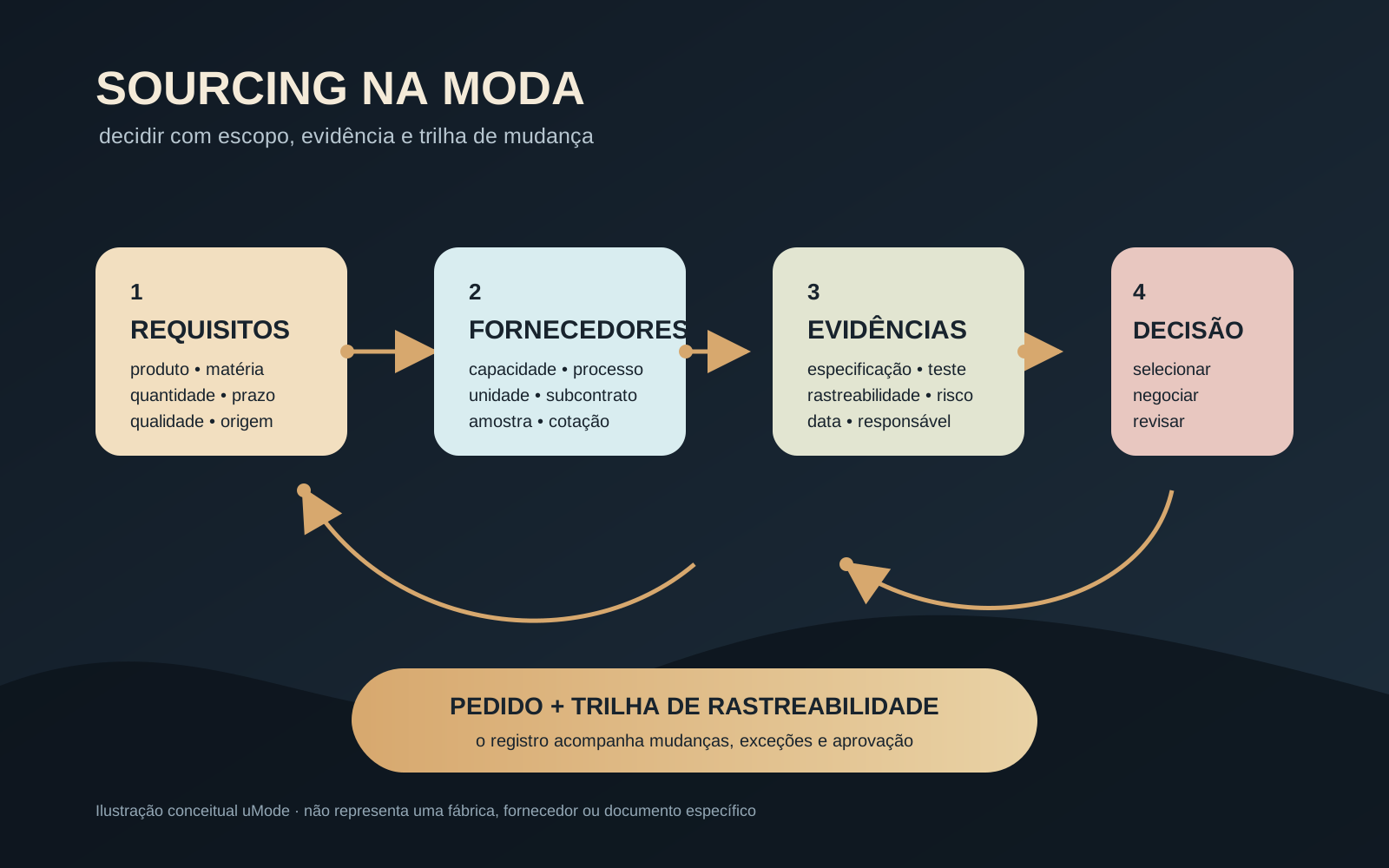
Fashion sourcing turns product requirements into a verifiable decision about materials, suppliers, capacity, cost, timing and risk. It connects samples, evidence and purchase orders without reducing supplier choice to the lowest price.
Sources
Want to apply this to your operation?