Santa Catarina textile cluster
Santa Catarina textile cluster. Santa Catarina's textile cluster is best understood as an arrangement of activities spanning textiles, apparel, leather and footwear rather than as a single company. In FIESC's Competitiveness Atlas, the arrangement accounted for 12.1% of Santa Catarina's Gross Industrial Production Value in 2022.
On this page
What is Santa Catarina textile cluster?
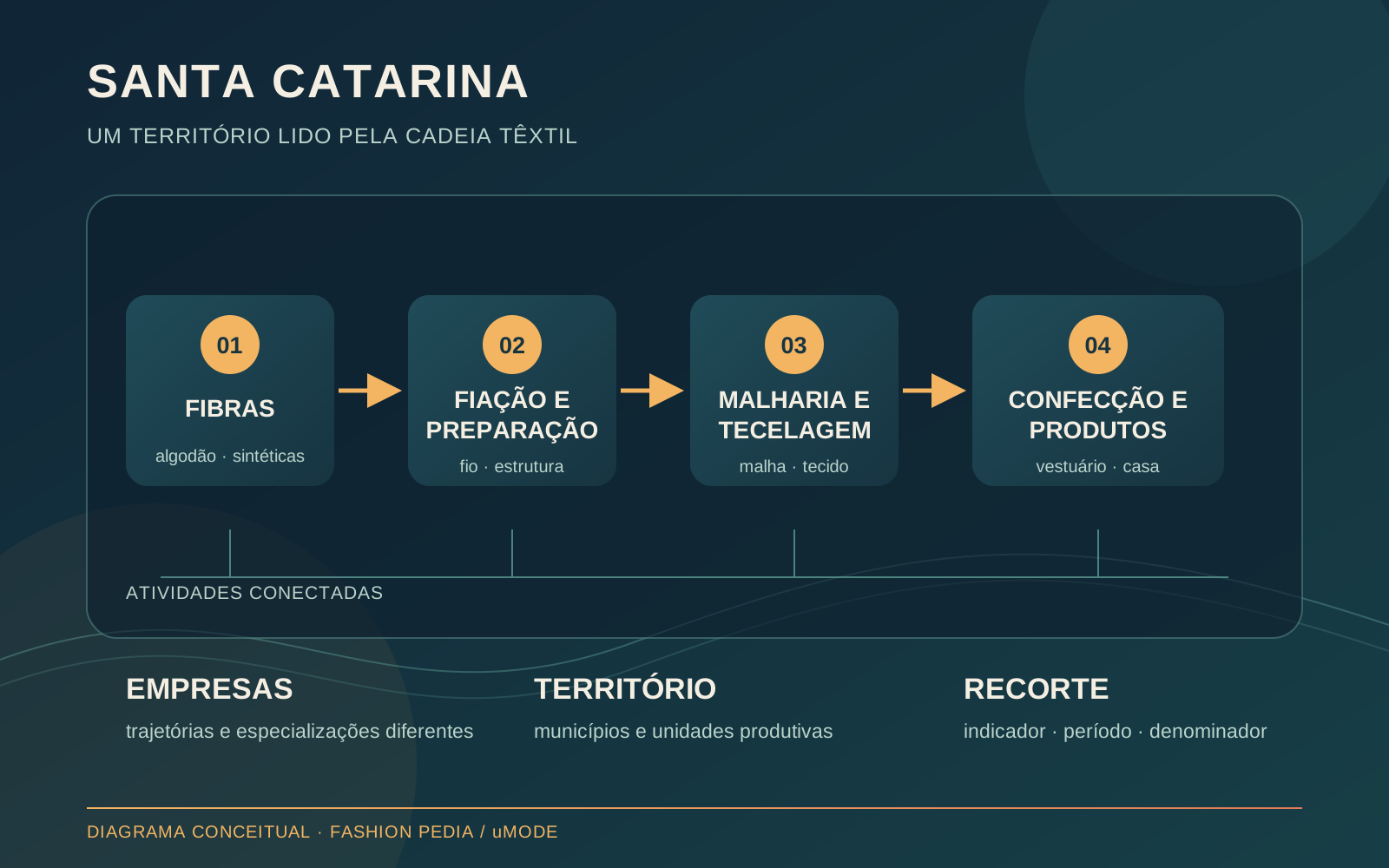
Santa Catarina's textile cluster is an arrangement of activities, not a single company. FIESC's Competitiveness Atlas places textile-fibre preparation, spinning, weaving, household textile articles, knitted-fabric manufacturing and sewing-based apparel production within the same sectoral frame. This definition separates the industrial chain from a brand, an individual factory or a single municipality.
The same atlas ranks this arrangement second in Santa Catarina's Gross Industrial Production Value, with a 12.1% share in 2022. That figure is a state-level indicator with its own period and denominator: it is not a company's revenue, a brand's market share or a measure of the entire fashion economy.
How does the arrangement divide across processes and employment?
The distinction between process and employment is essential when reading the cluster. Apparel and accessory manufacturing accounted for 53.0% of the state's Industrial Transformation Value within the arrangement and represented 59.1% of Santa Catarina's formal employment links in that same sectoral set. These percentages measure different dimensions and should not be treated as interchangeable.
Knitted-fabric manufacturing had the strongest national prominence in formal employment, accounting for 48.2% of Brazil's formal employment links in that segment. The atlas also draws a technical boundary: Textiles cover fibre preparation, spinning and weaving, while Apparel covers clothing made by sewing for any use. This distinction connects the entry to spinning, weaving, knitting and apparel without making those terms synonyms.
Which company trajectories help read the territory?
The companies below are examples of different trajectories and specializations, not a ranking of the cluster. Lunelli began in 1981 from the project built by Antídio Aleixo Lunelli and Beatriz Ender, initially under the name Lunender. The company states that its factories are in Santa Catarina, São Paulo, Ceará and Paraguay and reports 175,000 square metres of built area, 5,000 direct workers, 2,500 indirect workers and 26.5 million pieces produced per year. Those figures are company-reported and describe Lunelli, not the whole arrangement.
Karsten presents itself as a Brazilian brand with more than 140 years of history and products for bed, table, bath and home decoration. Grupo Malwee reports that it was founded in 1968 and has more than 4 million square metres of environmental preservation areas in Santa Catarina; it also reports that 100% of the energy used in its factories is renewable. These are institutional descriptions of individual organizations, useful for locating examples in the graph of brands, apparel and home textiles, but insufficient to measure the cluster's overall performance.
Why does this scope matter for fashion's supply chain?
The scope matters because it makes the unit of analysis explicit: fibre, yarn, fabric, knit, garment, home product, company or territory. For sourcing and product development, that discipline prevents an industrial activity from being compared with a brand or a state indicator from being read as a company profile. Links to ABIT, SENAI CETIQT and TexBrasil extend navigation toward related institutions and initiatives; they do not assert corporate equivalence or membership in the arrangement.
The lead image is a conceptual representation of the chain and does not prove location, volume or performance. For comparisons, retain the source, period, unit of analysis and denominator attached to the reported data.
Verified facts
- The Textile, Apparel, Leather and Footwear sectoral arrangement includes textile-fibre preparation, spinning, weaving, household textile articles, knitted-fabric manufacturing and sewing-based apparel production.
Source: observatorio.fiesc.com.br ↗ - The Textile, Apparel, Leather and Footwear sectoral arrangement was the second most important in Santa Catarina's Gross Industrial Production Value, with a 12.1% share in 2022.
Source: observatorio.fiesc.com.br ↗ - Apparel and accessory manufacturing accounted for 53.0% of the state's Industrial Transformation Value within this arrangement.
Source: observatorio.fiesc.com.br ↗ - Apparel and accessory manufacturing represented 59.1% of Santa Catarina's formal employment links within this sectoral arrangement.
Source: observatorio.fiesc.com.br ↗ - Knitted-fabric manufacturing had the strongest national prominence in formal employment, accounting for 48.2% of Brazil's formal employment links in that segment.
Source: observatorio.fiesc.com.br ↗ - The Textile sector covers textile-fibre preparation, spinning and weaving, while Apparel covers clothing made by sewing for any use.
Source: observatorio.fiesc.com.br ↗ - Lunelli began in 1981 from the project built by Antídio Aleixo Lunelli and Beatriz Ender, initially under the name Lunender.
Source: lunelli.com.br ↗ - Lunelli states that its factories are located in Santa Catarina, São Paulo, Ceará and Paraguay.
Source: lunelli.com.br ↗ - Lunelli reports 175,000 square metres of built area, 5,000 direct workers, 2,500 indirect workers and 26.5 million pieces produced per year.
Source: lunelli.com.br ↗ - Karsten presents itself as a Brazilian brand and reports more than 140 years of history, with products for bed, table, bath and home decoration.
Source: karsten.com.br ↗ - Grupo Malwee reports that it was founded in 1968.
Source: grupomalwee.com.br ↗ - Grupo Malwee reports more than 4 million square metres of environmental preservation areas in Santa Catarina.
Source: grupomalwee.com.br ↗ - Grupo Malwee reports that 100% of the energy used in its factories is renewable.
Source: grupomalwee.com.br ↗
Related entries
SENAI CETIQT
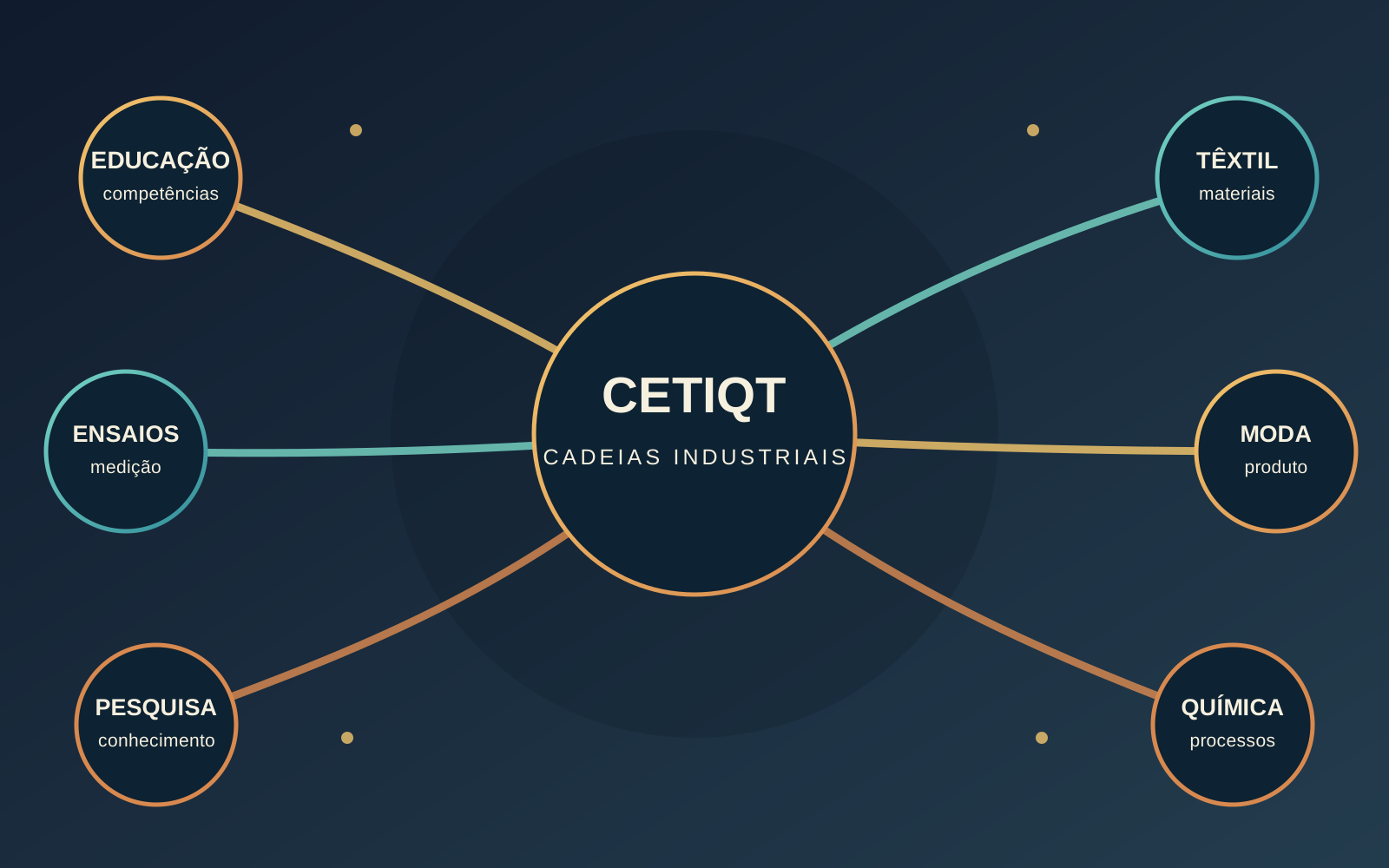
SENAI CETIQT is the Center for Technology of the Chemical and Textile Industry, with a stated role in professional education, technological innovation, metrology, consulting, and research for textile, apparel, and chemical value chains.
Flat knitting
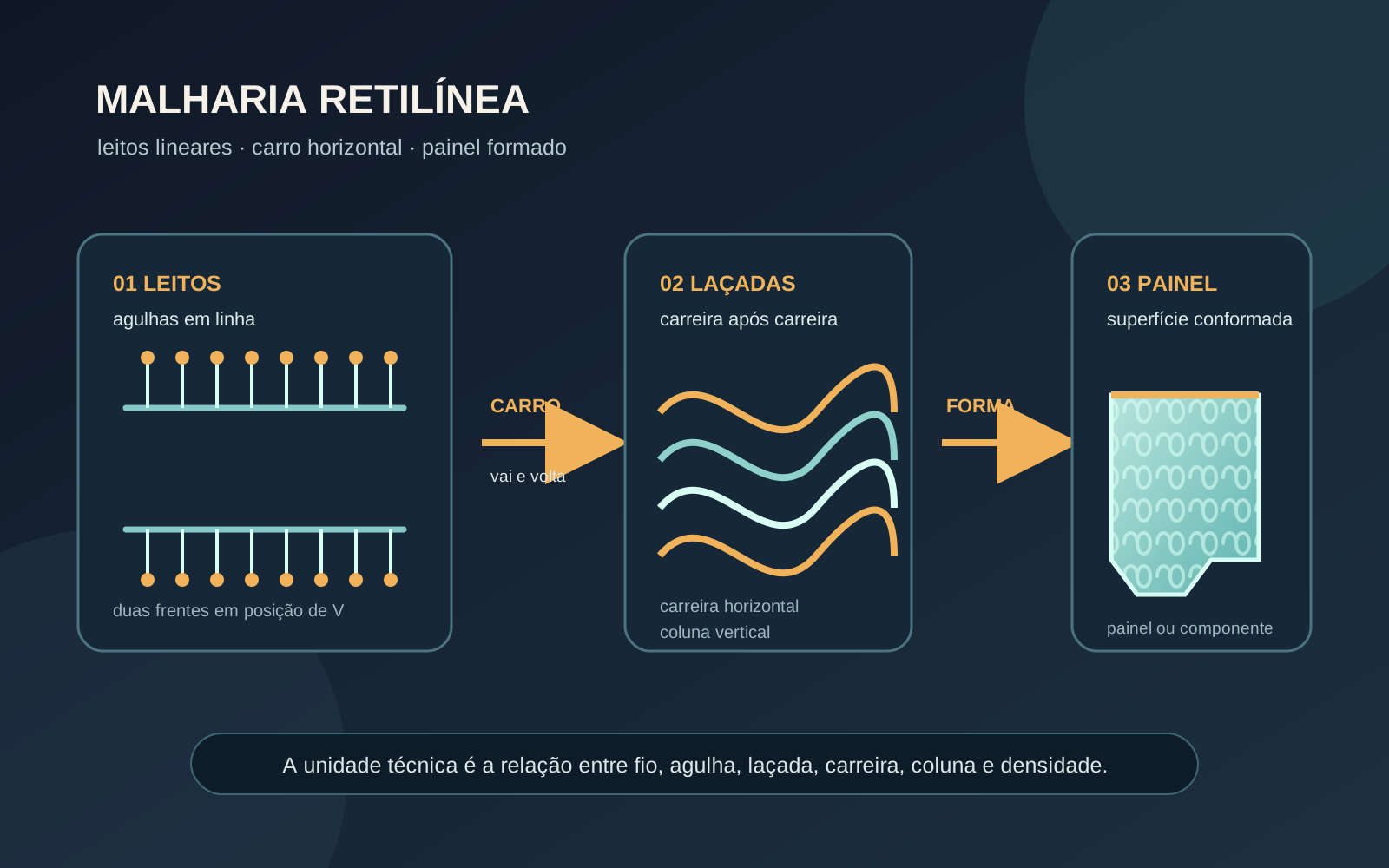
Flat knitting forms knitted fabric on a weft-knitting machine with linear needle beds and a carriage that travels horizontally. The arrangement can shape panels and garment components during knitting; it is not the same as circular knitting, which forms a tube around a cylinder.

Industrial weaving
Weaving is the process of forming fabric by regularly interlacing two yarn systems: warp in the lengthwise direction and weft across the width. The construction results from warp preparation, shed formation, weft insertion and beat-up, and control of yarn delivery and fabric take-up.
Texbrasil
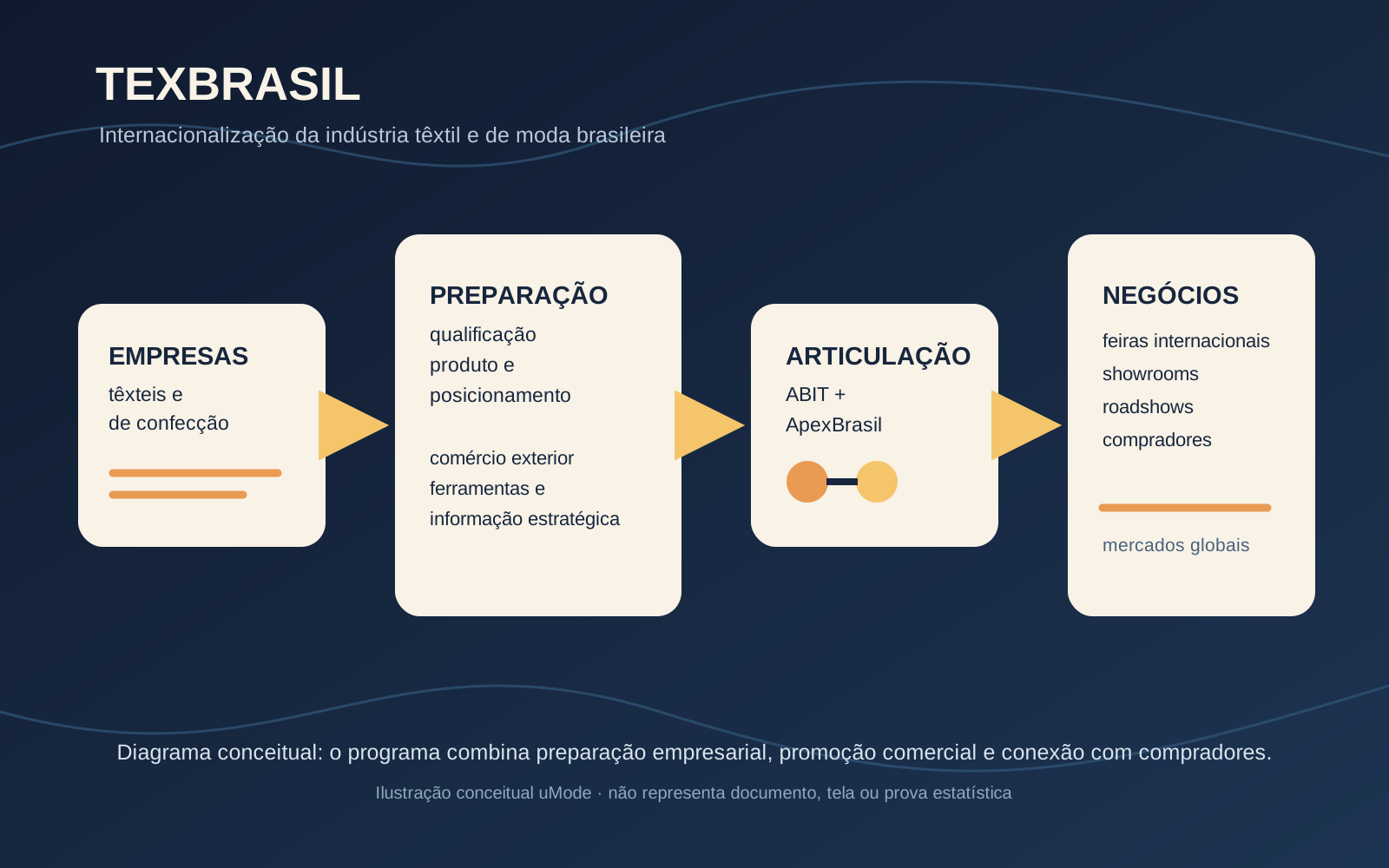
Texbrasil is the Brazilian Textile and Fashion Industry Internationalization Program, delivered through a partnership between Abit and ApexBrasil. It works with textile and apparel companies on export preparation, trade promotion and connections with international markets.
Sources
Want to apply this to your operation?