First-pass yield in apparel
First-pass yield in apparel. First-pass yield (FPY) is the proportion of units leaving a process to the units entering it during a defined period. In apparel, the measure becomes useful only when the operation, unit, acceptance rule and treatment of rework are stated before the count begins.
On this page
What is First-pass yield in apparel?
First-pass yield (FPY) is a flow ratio: units leaving a selected operation divided by units entering it during a defined period. It is also called throughput yield (TPY). For an apparel line, the measure should be scoped before counting: a garment at sewing, a batch at finishing and a fabric lot at incoming inspection are different denominators.
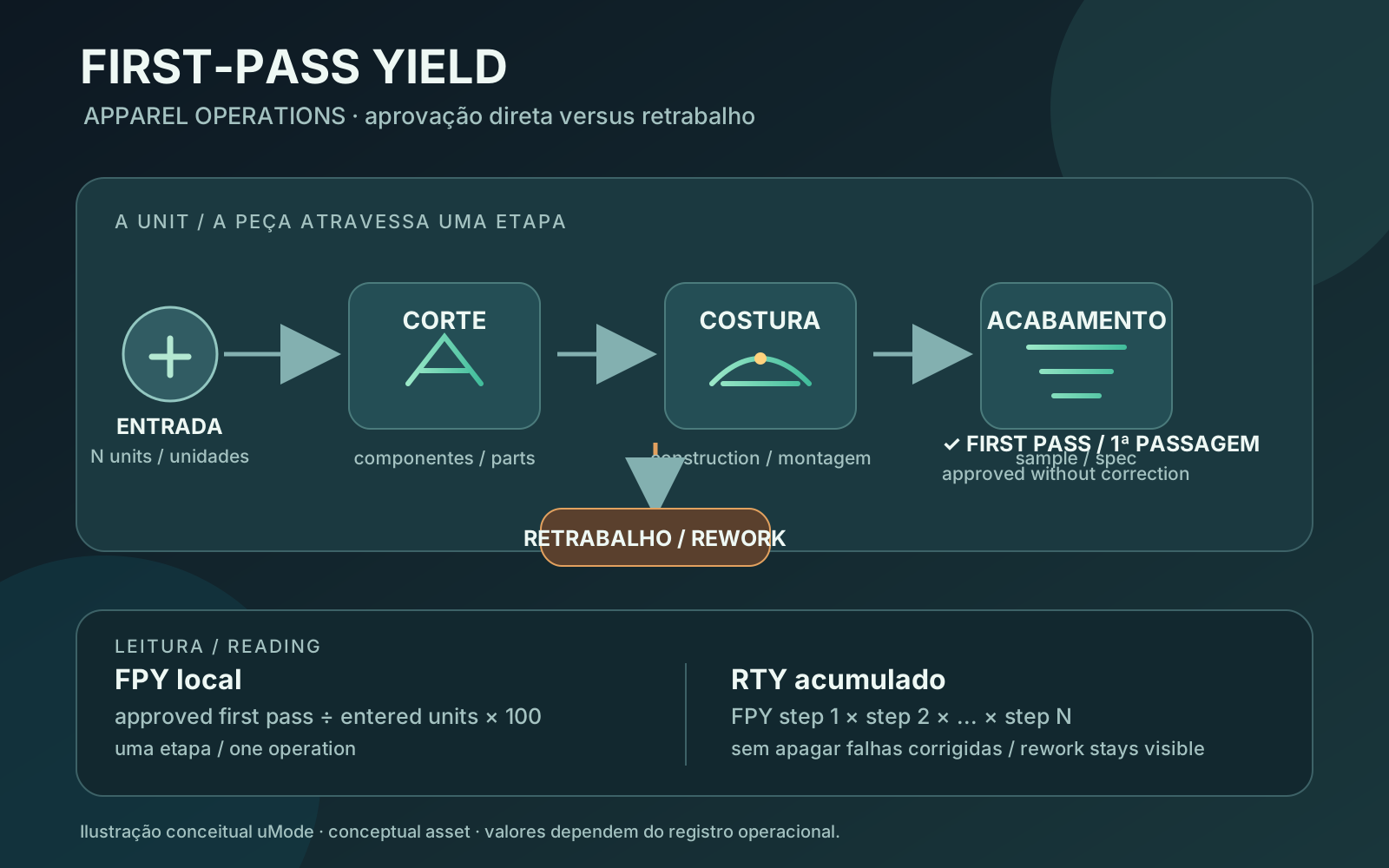
State the reference, operation, acceptance rule, measurement window and treatment of rejected units first. In quality control, “approved on the first pass” should mean that the unit met the stated rule without returning for correction. The lead image is a conceptual explanation of that flow, not documentary evidence from a factory.
How should it be calculated and recorded?
For one operation, use the practical form: FPY = units approved on the first pass ÷ units entering the operation × 100. For first-time yield across subprocesses, calculate each step’s yield and multiply the yields together. The important boundary is to avoid mixing a local sewing count with an accumulated finishing output.
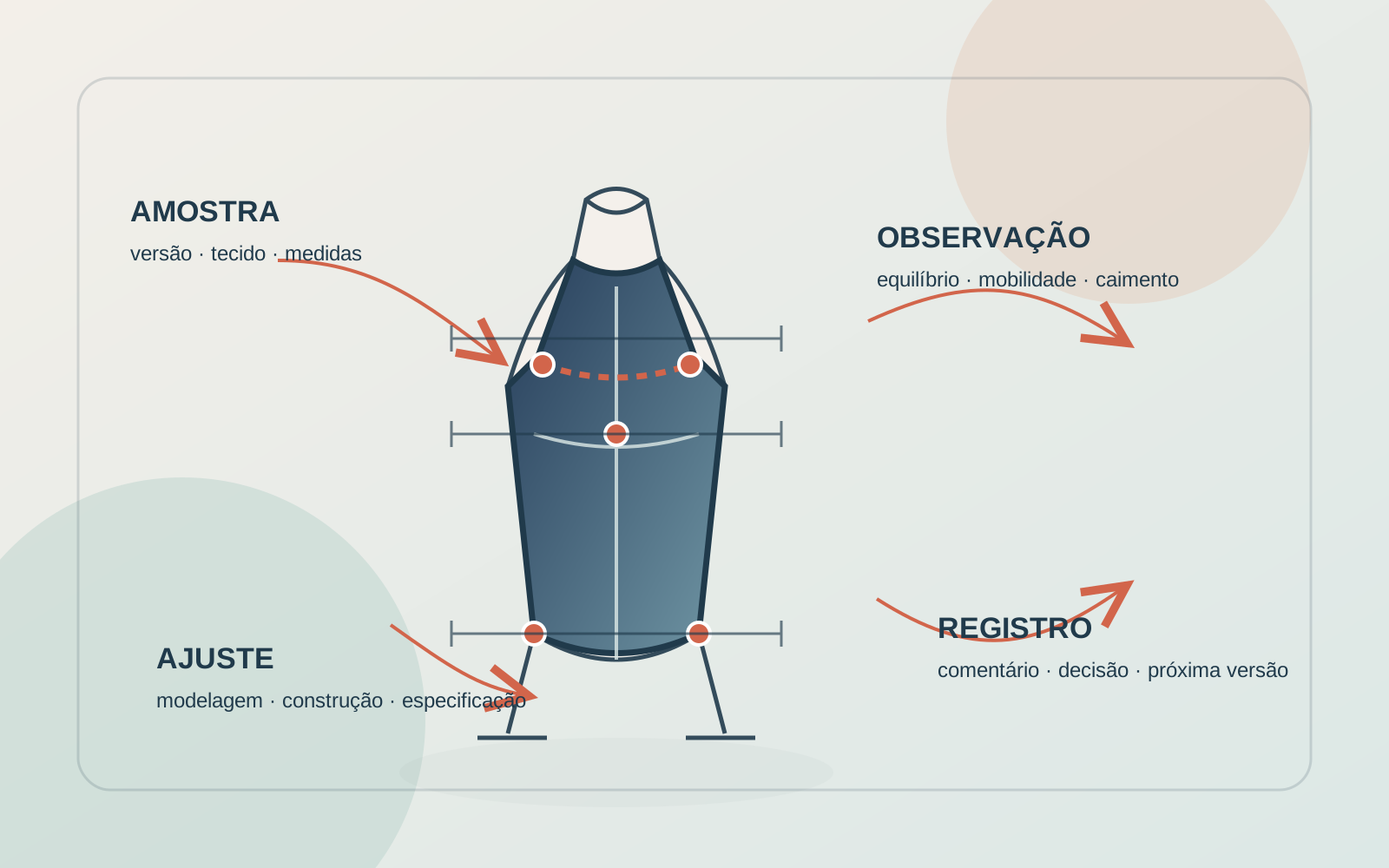
An apparel measurement record can include the style reference, lot, operation, quantity received, quantity approved without correction, quantity sent to rework, failure type, record owner and measurement period. These are organizing choices, not a universal standard. The acceptance rule may involve construction, measurement, fit or a component because manufacturing quality is read against a sample or specification. If the rule changes between lots, comparisons no longer describe the same measurement.
Where does FPY meet apparel defects?
FPY becomes more specific when it follows the points where a quality decision is made. At cutting, record whether components meet the defined marker, pattern and risk criteria; at sewing, whether construction and stitch work pass without correction; at finishing, whether the garment agrees with the sample and specifications; and in textile testing, whether fiber or fabric variations were found against the defined rule. These boundaries connect the indicator to tech pack, quality control and sample approval without turning FPY into a single global product score.
Keep design quality and manufacturing quality distinct. Materials, fit and construction methods belong to the first group; agreement between the produced garment and the sample or specification belongs to the second. That distinction helps record a measurement failure differently from an assembly failure, without assigning the cause automatically to one team.
FPY or RTY: which reading fits the operation?
FPY describes first-pass performance at the selected operation. RTY looks across the whole process without allowing a corrected failure to disappear: it multiplies the passing rates of the steps and represents the probability of moving through the process without a single defect. When total throughput looks high but RTY is low, the contrast makes rework visible.
An apparel dashboard can show FPY by operation and RTY for a style flow, but it should not label either one “final quality.” Use the lowest FPY as an investigation starting point when improvement capacity is limited. Keep the occurrence type visible — fabric irregularity, specification difference or construction correction — instead of reducing every event to one percentage.
Links to OTIF and product data quality point to the need for scope, an acceptance rule and a readable record. They do not make different metrics equivalent. FPY matters because it makes direct approval visible at the apparel operation where the decision actually happened.
Verified facts
- The FPY/TPY calculation uses units entering and leaving a process as its denominator and numerator, respectively, and is tied to a specified time period.
Source: en.wikipedia.org ↗ - To calculate first time yield (FTY) for a process divided into subprocesses, the yield of each step is calculated and the yields are multiplied together.
Source: en.wikipedia.org ↗ - The FTY formula shown divides the number of units leaving the process as good parts by the number of units put into the process.
Source: en.wikipedia.org ↗ - Rolled throughput yield (RTY) is the probability of a product or service making it through the entire process without having a single defect.
Source: isixsigma.com ↗ - RTY does not factor in rework; when total throughput yield is high and RTY is low, that signals that large amounts of rework are being performed.
Source: isixsigma.com ↗ - The RTY formula multiplies the passing rates of all the steps within the process.
Source: isixsigma.com ↗ - When process-improvement resources are limited, the steps with the lowest first-pass yield are presented as the priority focus.
Source: isixsigma.com ↗ - In garment manufacturing, quality control involves monitoring and inspecting various production stages to ensure desired standards of quality, safety and consistency.
Source: textileschool.com ↗ - In garment design quality, materials, fit and construction methods are elements that are considered.
Source: textileschool.com ↗ - Manufacturing quality concerns the degree to which the produced garment agrees with the sample or specifications.
Source: textileschool.com ↗ - During textile testing, variations in a fiber or fabric such as length, colour, fineness, threads per inch and cover factor are detected.
Source: textileschool.com ↗
Related entries

Sources
Want to apply this to your operation?