Vicunha Têxtil
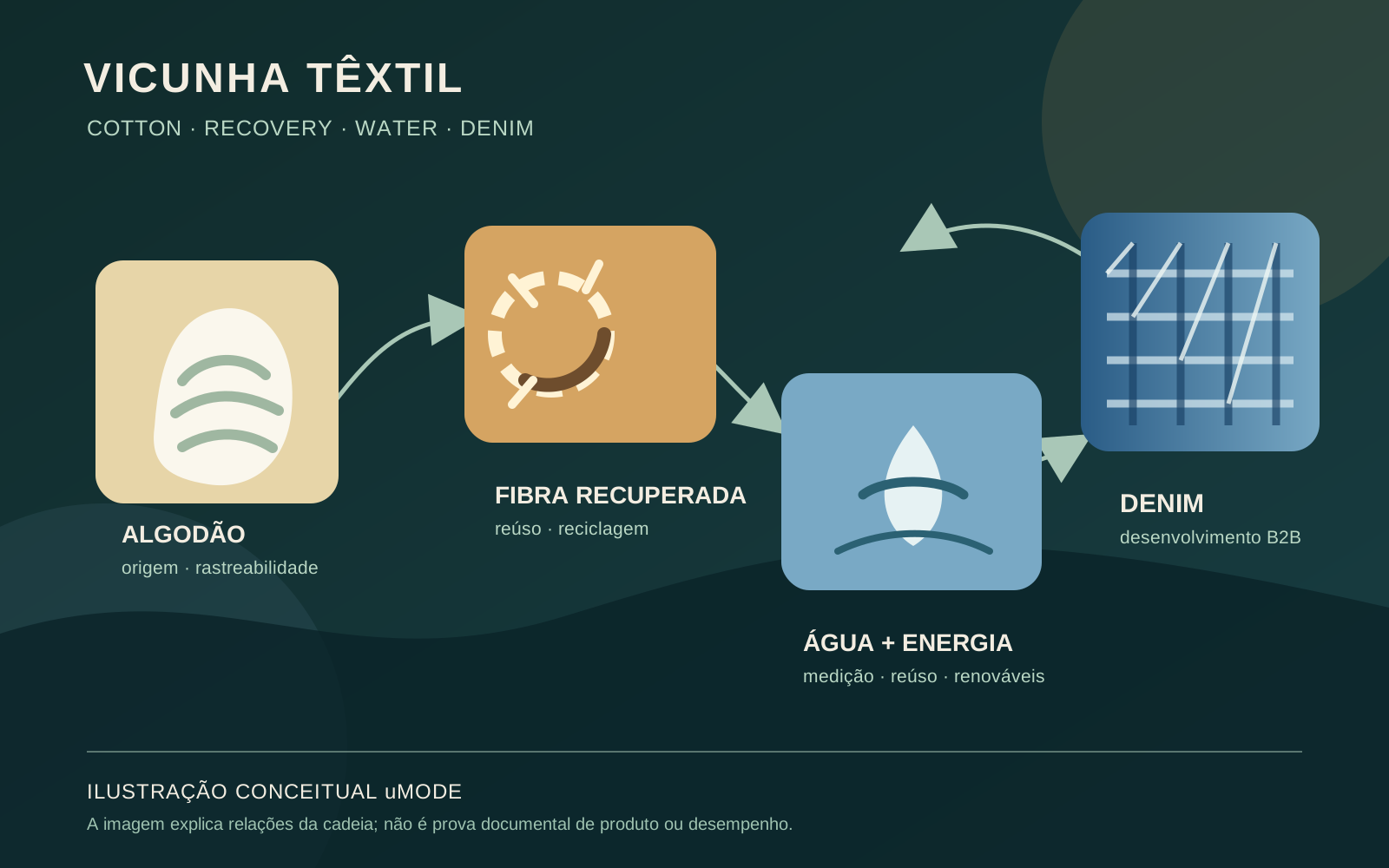
Vicunha Têxtil is a Brazilian multinational founded in 1967, with industrial activity in denim and publicly documented initiatives involving cotton traceability, water reuse, renewable energy and recovered fibres. For sourcing, the key distinction is between the company’s fabric portfolio and environmental targets or indicators published by the company itself.
On this page
What is Vicunha Têxtil?
Vicunha Têxtil is a Brazilian multinational founded in 1967, with an industrial position built around denim and fabrics for the fashion supply chain. The company reports production units in Brazil, Argentina and Ecuador, as well as operations in Latin America, Europe and Asia. It also reports pioneering denim manufacturing in Brazil’s Northeast. These details place Vicunha as a textile supplier rather than a retail label.
For Brazilian scale context, Abit reports 25,700 textile and apparel production units and 2.2 million tonnes produced across the sector. That figure describes the whole sector, not Vicunha. Keeping the scopes separate matters when comparing capacity, fabric origin and the boundaries of a quotation.
Which materials and indicators does Vicunha publish?
The company reports reusing cotton to produce fabrics for more than 30 years and recovering and recycling 7,000 tonnes of cotton per year. It also reports being the first Brazilian denim manufacturer to use locally sourced regenerative cotton, that 80% of its production has ABR/BCI certification, and that it has held GRS certification since 2013. Regenerative cotton is presented as a declared initiative and sourcing characteristic; it does not justify assuming that every article in the portfolio has the same composition or certification.
For environmental indicators, Vicunha reports saving 160 million litres of water per year and that 48% of consumed energy comes from renewable sources. For a reuse project connected to the Pacajus unit, the company reports an estimated 95% reduction in water consumption. It also reports being the first in Brazil to measure the life-cycle water footprint of jeans. In jeans development, these statements should be checked by article, period, production unit and method before entering a technical specification.
How can Vicunha be used in fashion sourcing?
The published scale helps frame purchasing questions: Vicunha reports serving 4,500 customers in more than 20 countries, with 6,897 registered employees and 2,100 active suppliers. Those numbers are self-reported on the institutional page and do not replace a commercial confirmation of availability, lead time, MOQ, composition, weight, width, finish or lot-level certification.
Trade publication Textile World reported that Vicunha fabrics appeared in the Kingpins 2021 Most Sustainable Products collection. The same article clarified that the showcase was not a competition but a presentation of sustainable denims. For fashion sourcing, that is a sign of sector visibility, not an independent performance ranking.
A technical reading should connect cotton, weaving, spinning, finishing and article documentation. When comparing suppliers, request composition, construction, weight, usable width, finish, lot, production unit, applicable certificates and the method behind environmental indicators. This lets a buyer distinguish a company-level capability from a verifiable fabric specification while navigating the wider cotton and Brazilian textile landscape.
Verified facts
- Vicunha reports that it was founded in 1967.
Source: vicunha.com ↗ - Vicunha reports production units in Brazil, Argentina and Ecuador, plus operations in Latin America, Europe and Asia.
Source: vicunha.com ↗ - Vicunha reports that it pioneered denim manufacturing in Brazil’s Northeast.
Source: vicunha.com ↗ - Vicunha reports recovering and recycling 7,000 tonnes of cotton per year.
Source: vicunha.com ↗ - Vicunha reports saving 160 million litres of water per year.
Source: vicunha.com ↗ - Vicunha reports that 48% of its consumed energy comes from renewable sources.
Source: vicunha.com ↗ - Vicunha reports serving 4,500 customers in more than 20 countries.
Source: vicunha.com ↗ - Vicunha reports 6,897 registered employees and 2,100 active suppliers.
Source: vicunha.com ↗ - Vicunha reports reusing cotton to produce fabrics for more than 30 years.
Source: vicunha.com ↗ - Vicunha reports being the first Brazilian denim manufacturer to use locally sourced regenerative cotton.
Source: vicunha.com ↗ - Vicunha reports that 80% of its production has ABR/BCI certification.
Source: vicunha.com ↗ - Vicunha reports holding GRS certification since 2013.
Source: vicunha.com ↗ - Vicunha reports an estimated 95% reduction in water consumption for a reuse project connected to its Pacajus unit.
Source: vicunha.com ↗ - Vicunha reports being the first in Brazil to measure the life-cycle water footprint of a pair of jeans.
Source: vicunha.com ↗ - Textile World reported that Vicunha fabrics appeared in the Kingpins 2021 Most Sustainable Products collection.
Source: textileworld.com ↗ - Abit reports that Brazil’s textile and apparel sector includes 25,700 production units and produces 2.2 million tonnes.
Source: abit.org.br ↗
Related entries
Santista Têxtil
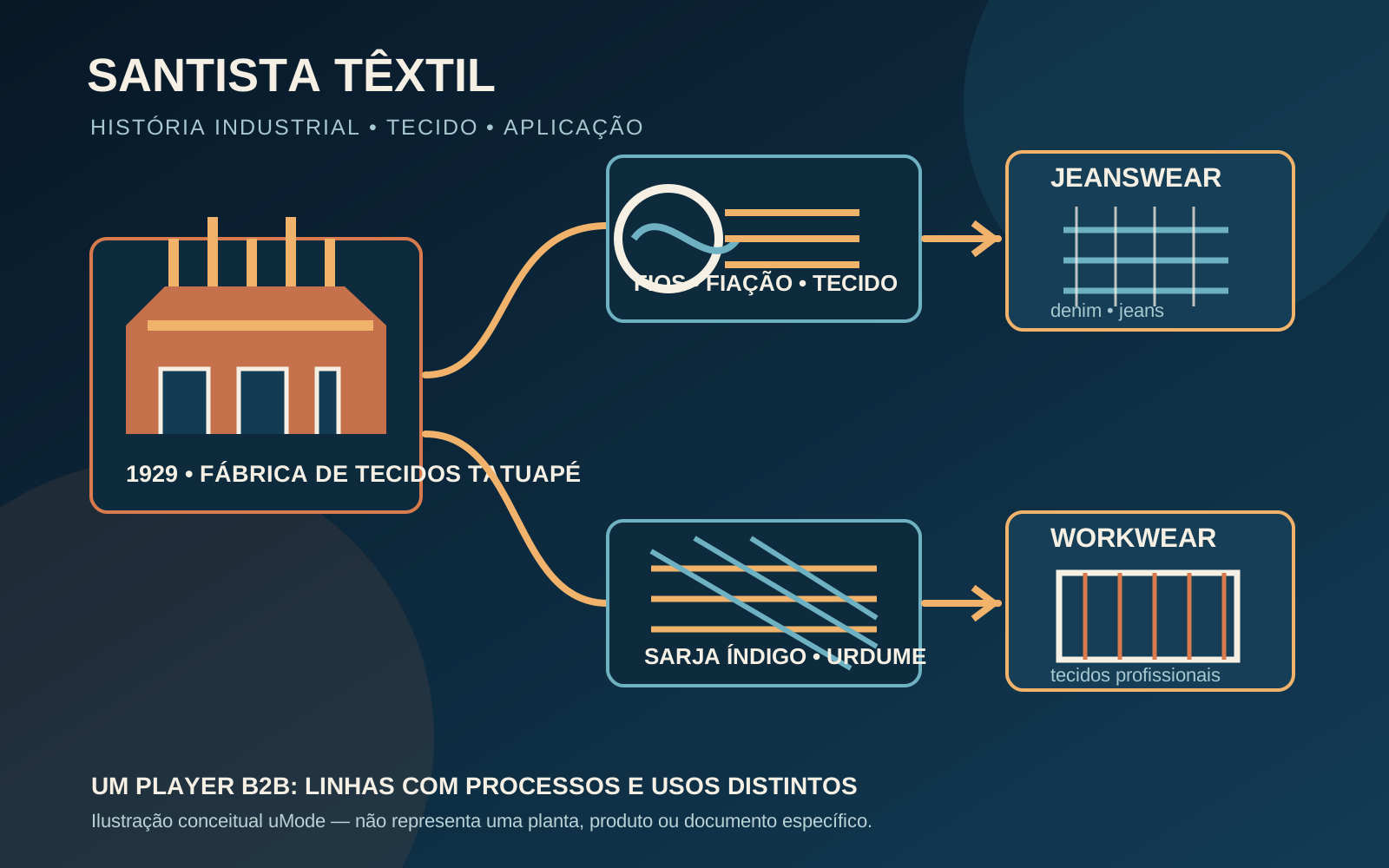
Santista Têxtil is a Brazilian textile company whose institutional history starts on 29 October 1929 with Fábrica de Tecidos Tatuapé. Its business scope combines Jeanswear, producing fabrics for jeans, and Workwear, producing special fabrics for professional clothing; indigo denim and its twill construction are essential to understanding the company’s material specificity.
Karsten
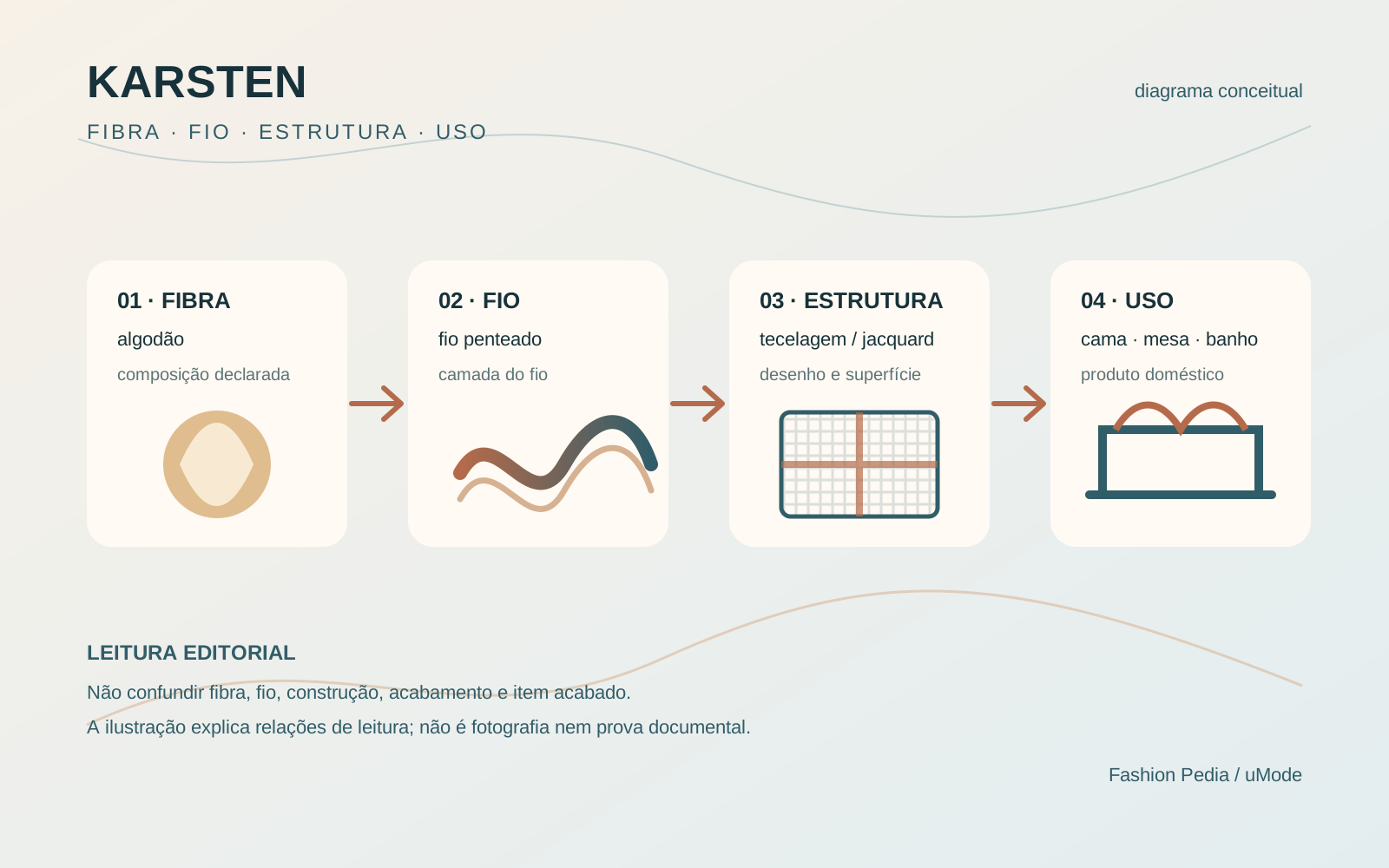
Karsten is a Brazilian home-textile brand focused on bed, table, bath and home-decor textiles, headquartered in Blumenau, Santa Catarina. Its documented history begins in 1882, develops through an in-house spinning operation, and reaches a domestic product range that explicitly uses cotton, jacquard, combed-yarn and thread-count terminology.
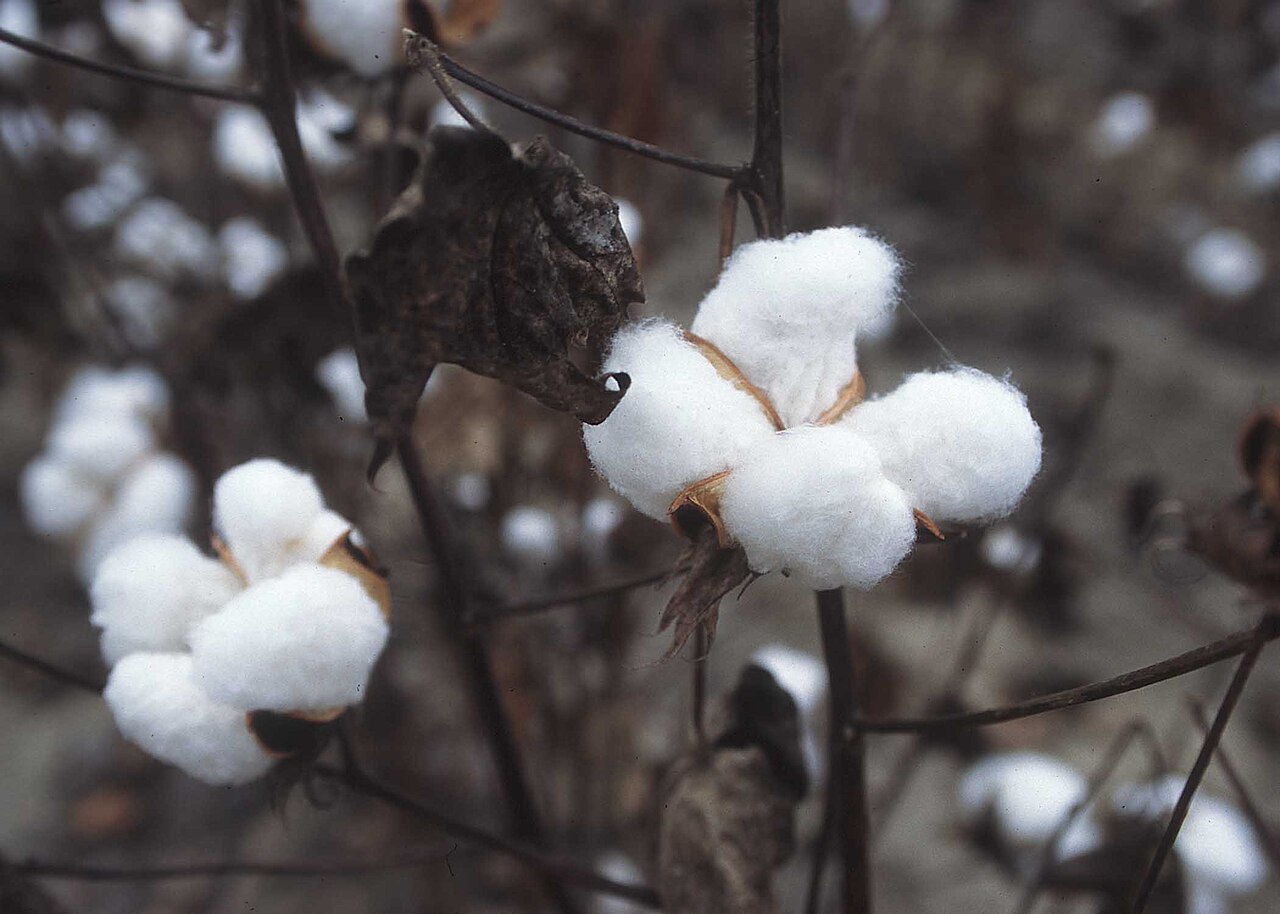
Cotton
Cotton is the most widely used natural fiber in the global textile industry. Grown around the seeds of the cotton plant (Gossypium), it is prized for comfort, breathability and versatility in apparel.

Industrial weaving
Weaving is the process of forming fabric by regularly interlacing two yarn systems: warp in the lengthwise direction and weft across the width. The construction results from warp preparation, shed formation, weft insertion and beat-up, and control of yarn delivery and fabric take-up.
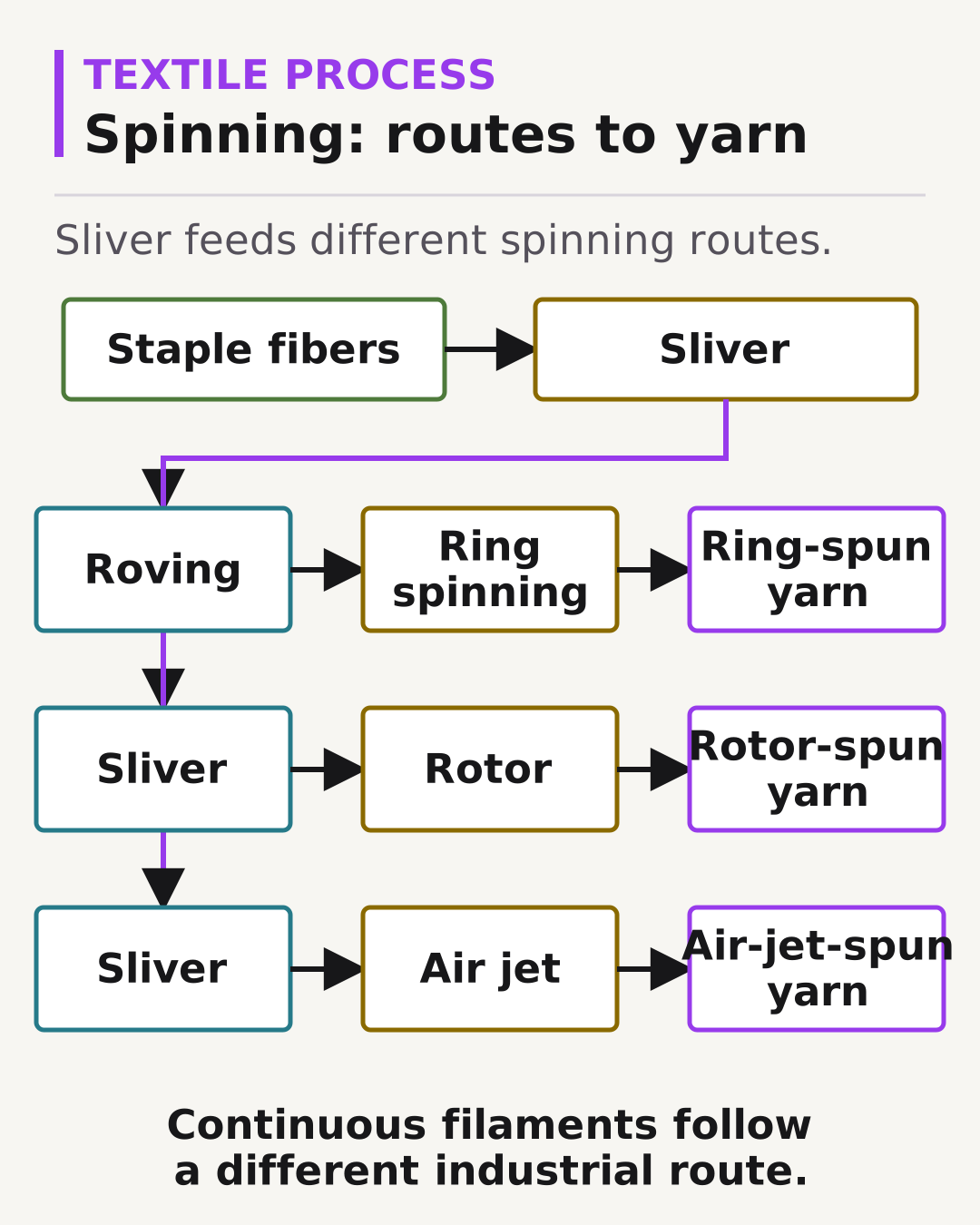
Textile spinning
Yarn production follows two distinct technical routes: spinning turns staple textile fibers into yarn through preparation, alignment, attenuation, and consolidation, while continuous-filament processing assembles or transforms filaments without repeating the full preparation used for short fibers. These routes determine properties of yarn sent to weaving or knitting.
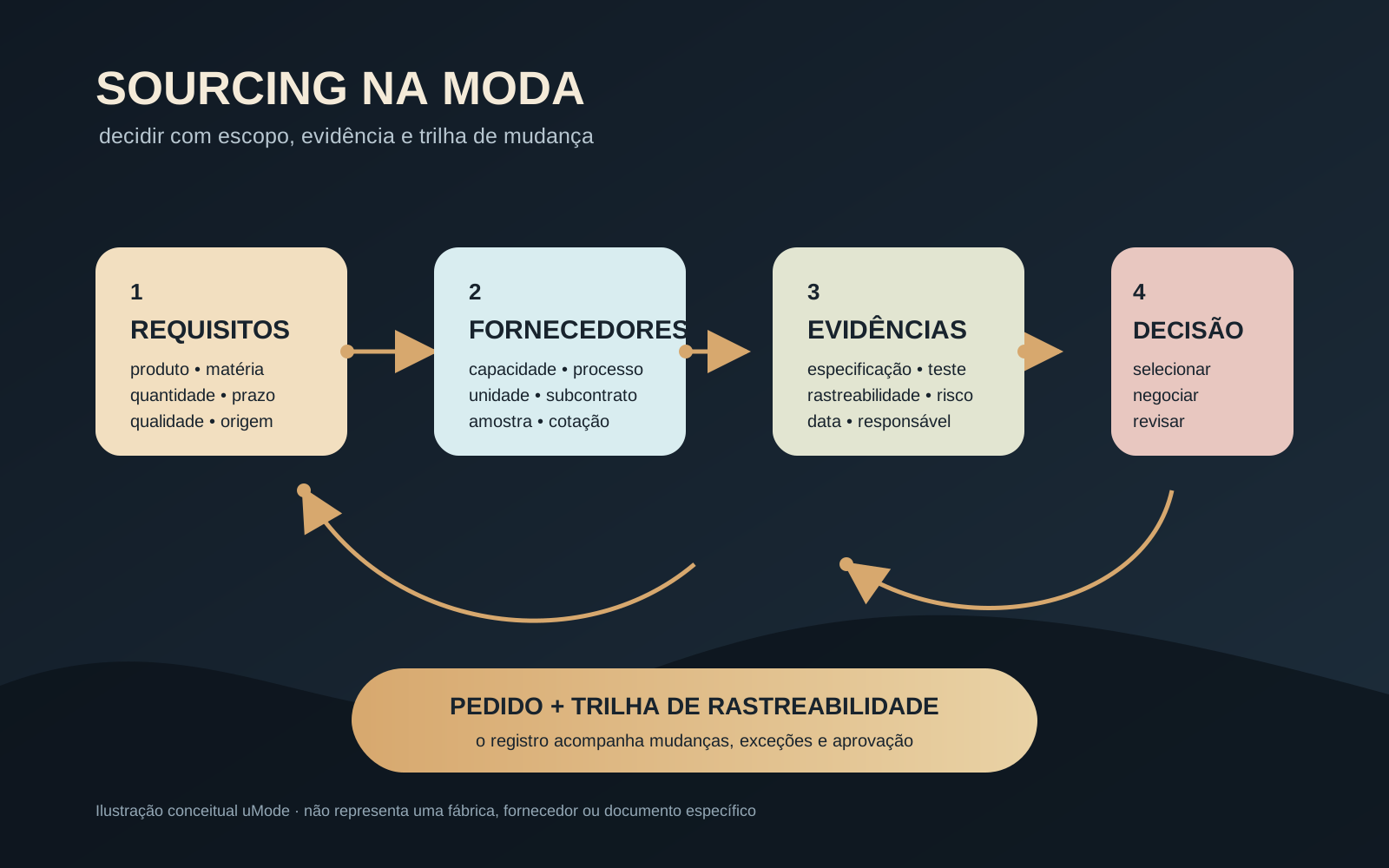
Fashion sourcing
Fashion sourcing turns product requirements into a verifiable decision about materials, suppliers, capacity, cost, timing and risk. It connects samples, evidence and purchase orders without reducing supplier choice to the lowest price.
Sources
Want to apply this to your operation?