Santista Têxtil
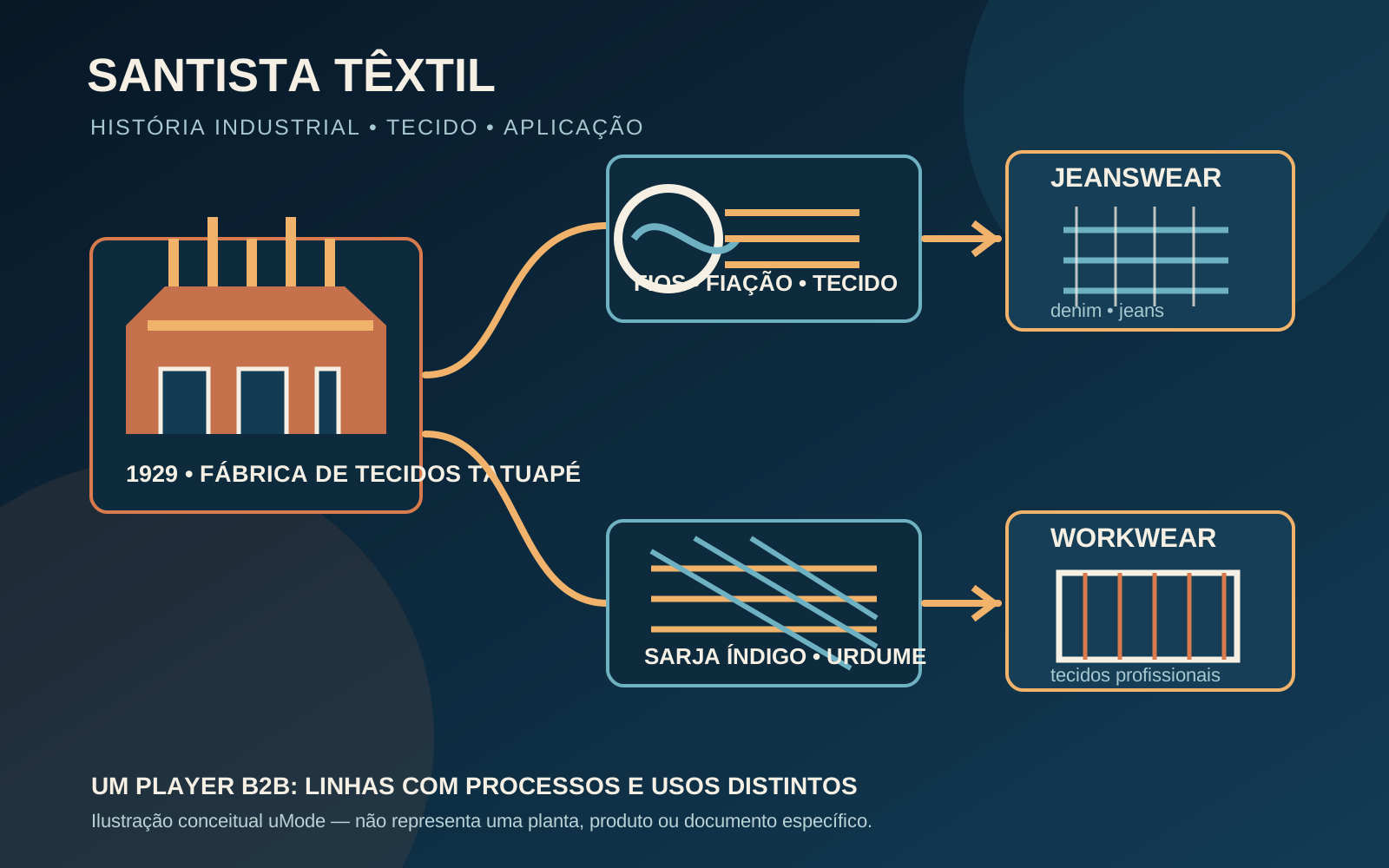
Santista Têxtil is a Brazilian textile company whose institutional history starts on 29 October 1929 with Fábrica de Tecidos Tatuapé. Its business scope combines Jeanswear, producing fabrics for jeans, and Workwear, producing special fabrics for professional clothing; indigo denim and its twill construction are essential to understanding the company’s material specificity.
On this page
What is Santista Têxtil?
Santista Têxtil is a Brazilian textile company whose institutional history reaches back to Fábrica de Tecidos Tatuapé, created on 29 October 1929. The company’s own timeline moves from flour bags and yarns to wool spinning, work-uniform fabrics and indigo denim. Within its business scope, Jeanswear and Workwear are not merely commercial labels: the technical opinion consulted describes significant dyeing-process and machinery differences between the two lines.
For fashion supply chains, this distinction matters because denim identifies a construction and dyeing route, while jeans names the garment made from that fabric. The opinion defines denim, also called Índigo Blue, as a woven twill fabric: indigo dyes the warp yarn while the weft remains undyed. That material reading is more specific than treating Santista as a generic textile supplier.
How did the company’s history reach denim and workwear?
The institutional history begins in 1929 with Fábrica de Tecidos Tatuapé S.A., which made bags for flour production and produced various types of yarn. In 1934, a new factory was dedicated to wool spinning. In 1956, the company began producing fabrics for work uniforms; in 1975, denim became its main focus and the company launched its indigo-blue Denim.
This sequence presents Santista as a B2B player with a documented history across different textile activities, without erasing the later shift toward denim. The reference to spinning is historical and should not be used to infer the composition of a current line. Likewise, the presence of weaving in the company’s path does not establish the weight, fiber content, finish or performance of a specific article without its documentation.
What distinguishes Jeanswear from Workwear?
The institutional website describes Jeanswear as the unit dedicated to fabrics for making jeans and Workwear as the unit focused on special fabrics for professional clothing. The technical opinion adds an operational distinction: rapid substitution between the lines is not possible because their dyeing processes differ significantly and each process uses its own machinery.
For product development, this changes the sourcing question. For denim, record the twill construction, indigo-dyed warp yarn and undyed weft when those are the article’s specifications. For workwear, do not automatically transfer requirements from one fabric to another: request the technical sheet, fiber content, weight, finish, test results and intended use of the article being approved. These are selection questions, not universal attributes of every Santista fabric.
The opinion also states that jeans is the garment made from denim. A team can therefore keep three levels separate when working with the supplier: the company, the business line and the textile article. This avoids confusing the organization’s name with the performance of a particular fabric or the result of a finished garment.
Where does Santista Têxtil sit in the supply chain?
The institutional website lists two production units in Brazil, in Americana and Tatuí, São Paulo state, as well as one production unit in Tucumán, Argentina. These locations belong to the institutional presentation consulted; they are not, by themselves, a capacity sheet, an availability guarantee or proof that every article is produced at each unit.
The relevance for fashion sourcing lies in keeping the unit of analysis correct. When requesting a sample, connect the request to the article code, construction, dyeing, width, weight, finish, lot and required tests. When comparing fabrics, preserve the difference between indigo denim for jeans and a special fabric for professional clothing. The supplier’s name opens the investigation; the article documentation closes the decision.
Santista Têxtil therefore occupies a distinct point in the Brazilian textile and apparel chain: a company with an industrial history that began in São Paulo, a documented historical specialization in denim and two B2B lines whose processes should not be treated as interchangeable.
Verified facts
- Santista Têxtil’s institutional history begins on 29 October 1929 with the creation of Fábrica de Tecidos Tatuapé S.A.
Source: santistasa.com.br ↗ - At the beginning, Fábrica de Tecidos Tatuapé made bags for flour production and produced various types of yarn.
Source: santistasa.com.br ↗ - In 1934, Santista opened a new factory dedicated to wool spinning.
Source: santistasa.com.br ↗ - In 1956, the company began producing fabrics for work uniforms.
Source: santistasa.com.br ↗ - In 1975, denim became the company’s main focus and Santista launched its indigo-blue Denim.
Source: santistasa.com.br ↗ - A SEAE technical opinion describes denim, also called Índigo Blue, as a woven twill fabric in which indigo dyes the warp yarn while the weft remains undyed.
Source: gov.br ↗ - The technical opinion states that jeans is the garment made from denim.
Source: gov.br ↗ - The technical opinion records that rapid substitution between the Jeanswear and Workwear lines is not possible because their dyeing processes and machinery differ significantly.
Source: gov.br ↗ - The institutional website presents two business units: Jeanswear, dedicated to producing fabrics for jeans, and Workwear, focused on special fabrics for professional clothing.
Source: santistasa.com.br ↗ - The institutional website lists two production units in Brazil, in Americana and Tatuí, São Paulo state, and one production unit in Tucumán, Argentina.
Source: santistasa.com.br ↗
Related entries
Jeans
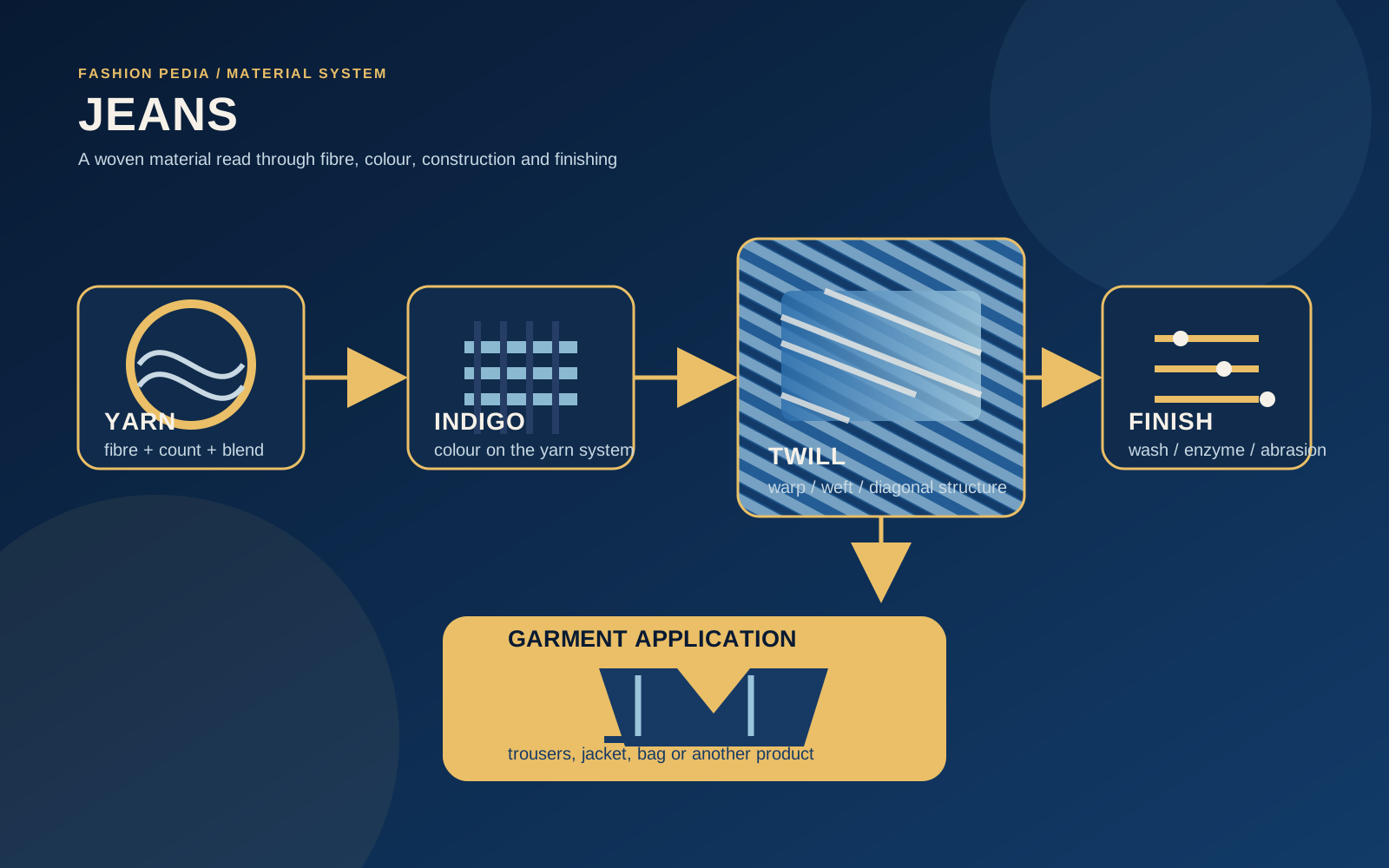
Jeans is a textile material based on denim, usually a woven twill in which yarn, indigo dye, construction and finishing shape the appearance and behaviour. Jeans names the material; trousers or a jacket are garments made from it.

Industrial weaving
Weaving is the process of forming fabric by regularly interlacing two yarn systems: warp in the lengthwise direction and weft across the width. The construction results from warp preparation, shed formation, weft insertion and beat-up, and control of yarn delivery and fabric take-up.
Textile spinning
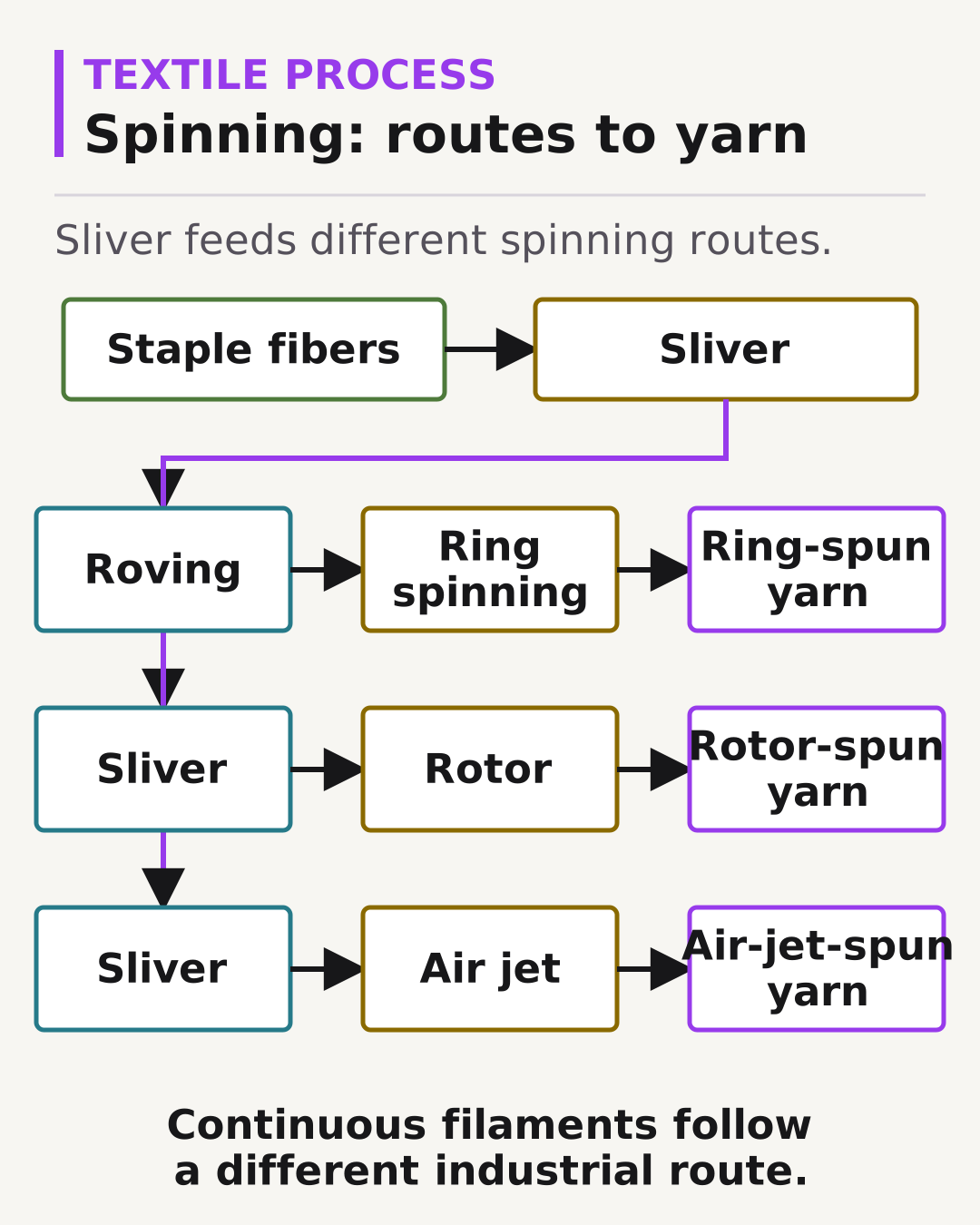
Yarn production follows two distinct technical routes: spinning turns staple textile fibers into yarn through preparation, alignment, attenuation, and consolidation, while continuous-filament processing assembles or transforms filaments without repeating the full preparation used for short fibers. These routes determine properties of yarn sent to weaving or knitting.
Fashion sourcing
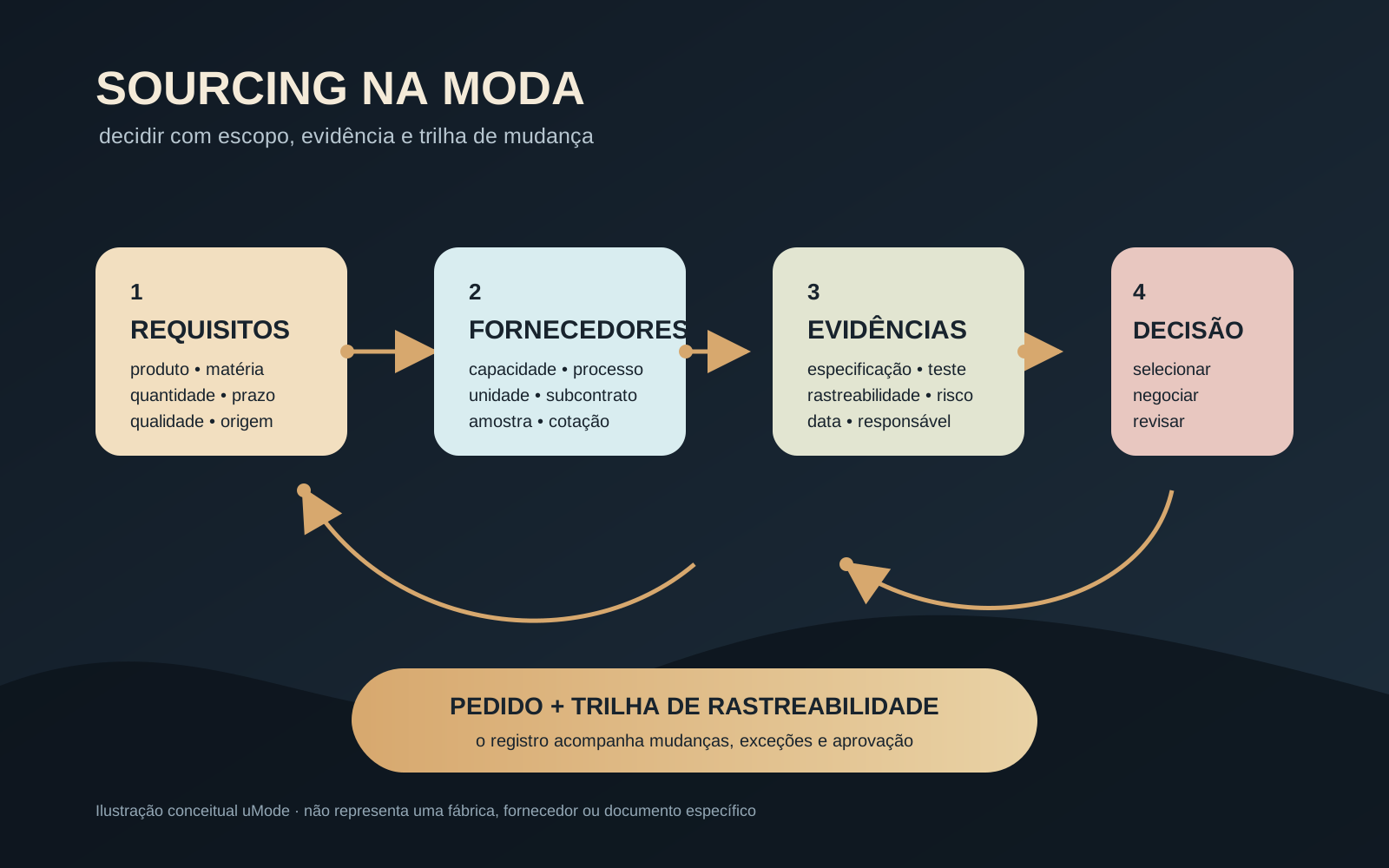
Fashion sourcing turns product requirements into a verifiable decision about materials, suppliers, capacity, cost, timing and risk. It connects samples, evidence and purchase orders without reducing supplier choice to the lowest price.
Sources
Want to apply this to your operation?