Jute
Jute is a plant bast fibre from the genus Corchorus, composed primarily of cellulose and lignin. Its long, coarse-looking fibres can be spun into coarse threads and made into fabrics; in fashion, the decision depends on construction, skin contact, and the finished article.
What is Jute?
Jute is a plant bast fibre from the genus Corchorus, composed primarily of cellulose and lignin. For fashion work, separate the raw material from a textile fibre, yarn, fabric, and finished article: “jute” can name the fibre or a later construction made from it. The fibre is long, rough, and shiny, and it can be spun into coarse, strong threads. Individual fibres range from 1 to 4 metres in length; that scale helps explain why preparation and spinning affect the result that people handle.
Jute is not one fixed surface. Individual fibres can range from very fine to very coarse, so a sample should not be described only by colour or a rustic appearance. When comparing suppliers, record what arrived: loose fibre, yarn, woven fabric, or a finished component. This prevents a property of one construction from being transferred to the material name itself.
How is jute fibre obtained?
The jute plant needs plain alluvial soil and standing water; temperatures from 20 to 40 °C and relative humidity of 70% to 80% are favourable cultivation conditions. Extraction begins with retting: bundled stems are immersed in slow-running water. Retting describes a stage in making the fibre available for spinning; it does not, by itself, describe the performance of a finished fabric.
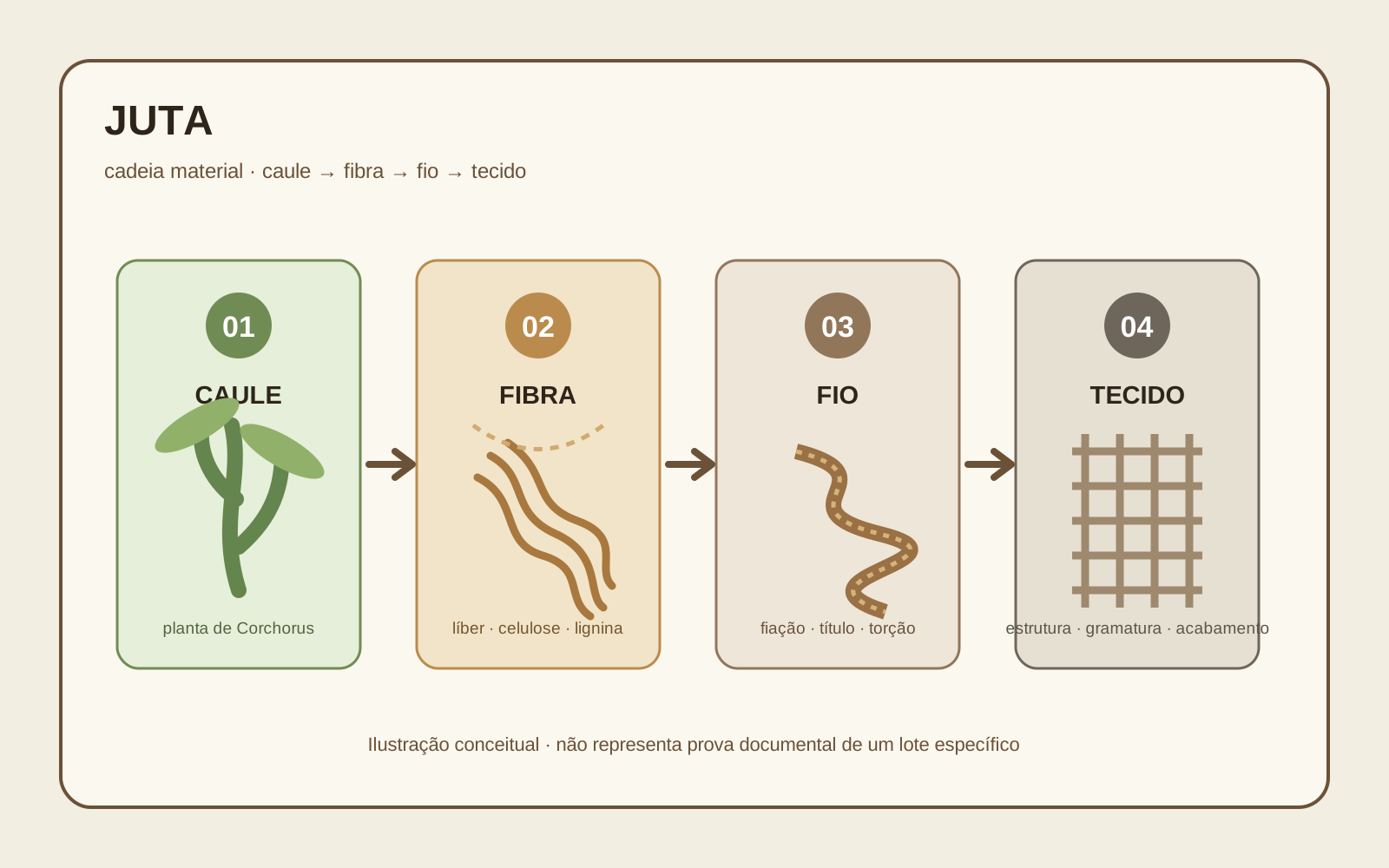
The material chain can be read as stem, fibre, yarn, and fabric. In the stem, the fibre is located in the bast, the phloem of the plant. After separation, development depends on spinning and weaving decisions. For a technical specification, record the received form, yarn count where applicable, fabric construction, width, weight, and observed finish. These are development fields, not universal properties that can be inferred from the word “jute”.
What does jute change in a fashion decision?
FAO groups jute, abaca, coir, kenaf, and sisal as natural fibres with multiple end uses. In fashion, that leaves more than one route: jute can be assessed as yarn, fabric, component, or technical surface. Start with the article’s function rather than only its visual association with rusticity, craft, or naturalness.
The range from very fine to very coarse fibres calls for comparable sampling. Test the selected construction in its intended use: skin contact, bending, seams, abrasion, cleaning, and interaction with lining or other natural fibres. If the goal is a textile with a textile finish, document the version before and after treatment; if the goal is a rigid structure, assess the complete construction rather than the isolated fibre.
In product documentation, separate composition, declared origin, lot, supplier, and finish. Jute is a raw material; the performance of a bag, shoe, or garment also depends on weaving, sewing, lining, and care. The word “sustainable” should not be applied automatically: a fibre characteristic is not a substitute for scope and evidence behind an environmental claim.
Verified facts
- Jute is a long, rough, shiny bast fibre that can be spun into coarse, strong threads.
Source: en.wikipedia.org ↗ - Jute is produced from flowering plants in the genus Corchorus, in the family Malvaceae.
Source: en.wikipedia.org ↗ - Jute fibres are composed primarily of cellulose and lignin and are collected from bast, the phloem of the plant.
Source: en.wikipedia.org ↗ - Individual jute fibres range from 1 to 4 metres in length.
Source: en.wikipedia.org ↗ - The jute plant needs plain alluvial soil and standing water for cultivation.
Source: en.wikipedia.org ↗ - Temperatures from 20 to 40 °C and relative humidity of 70% to 80% are favourable conditions for jute cultivation.
Source: en.wikipedia.org ↗ - Jute fibres are first extracted from bundled stems by retting them in slow-running water.
Source: en.wikipedia.org ↗ - FAO classifies jute, abaca, coir, kenaf, and sisal as natural fibres with multiple end uses.
Source: fao.org ↗ - Individual jute fibres can range from very fine to very coarse, and this variation suits a variety of uses.
Source: en.wikipedia.org ↗
Sources
Want to apply this to your operation?