Cedro Textile
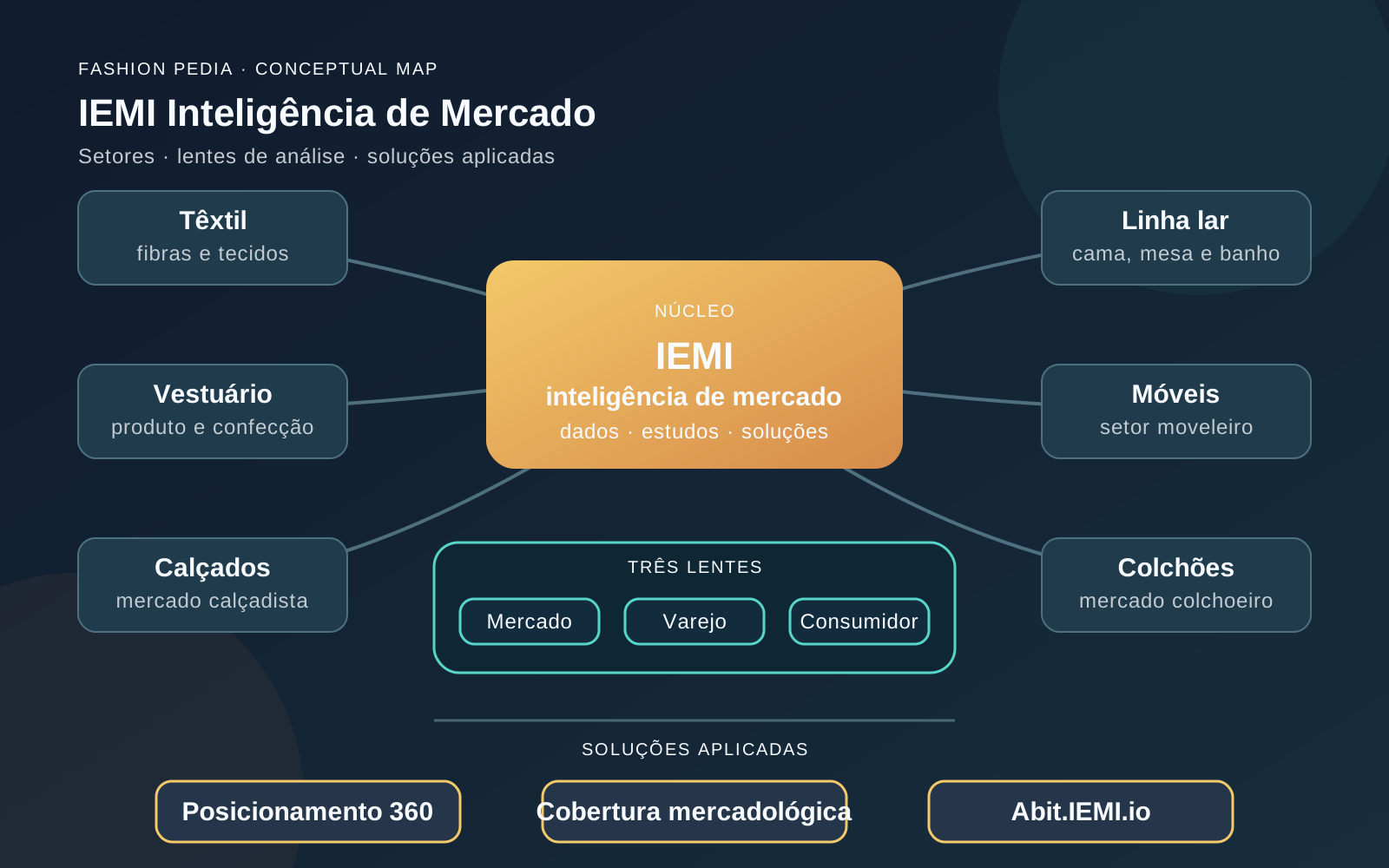
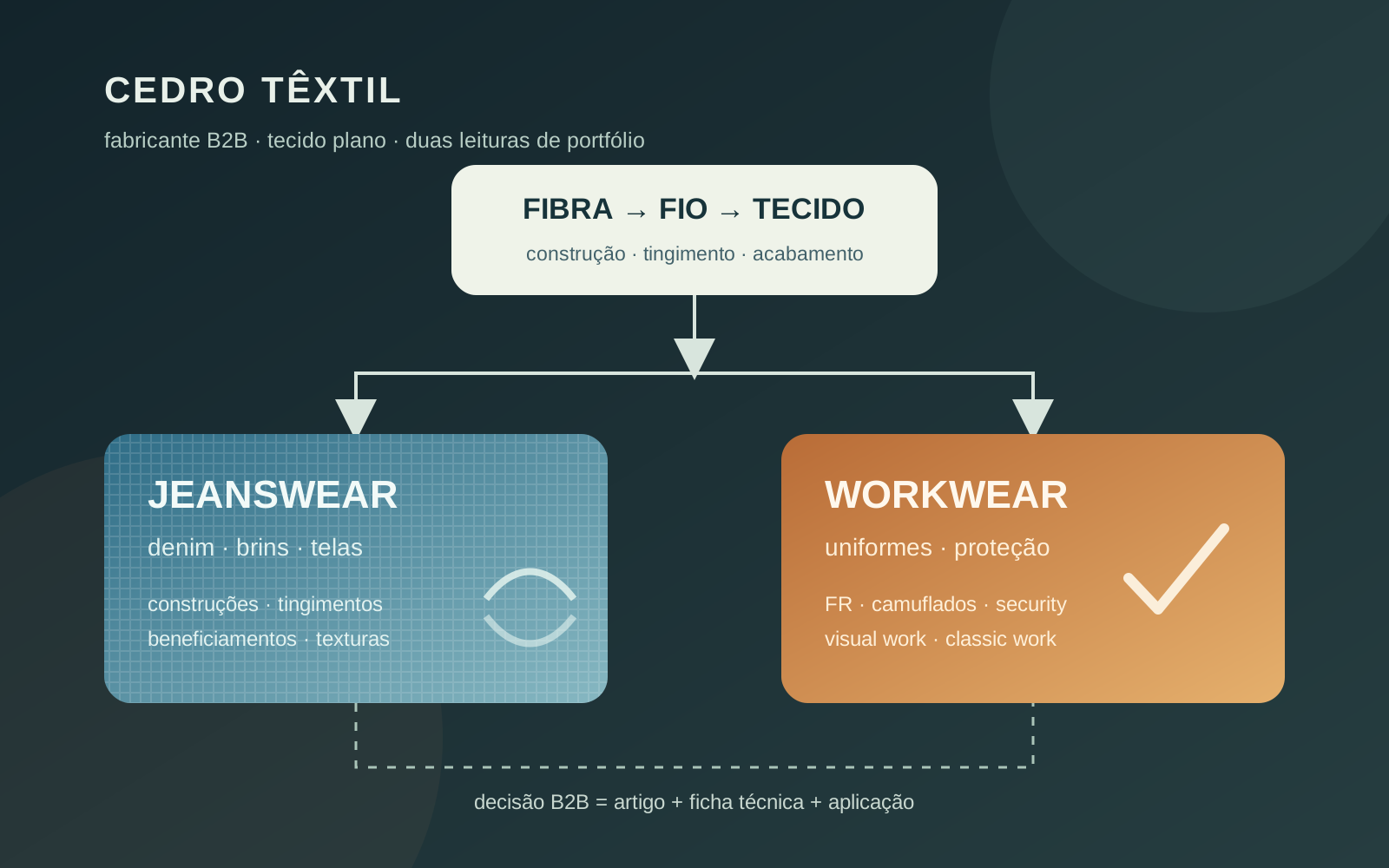
Cedro Textile is the editorial name for Companhia de Fiação e Tecidos Cedro e Cachoeira, a manufacturer whose institutional site presents a B2B portfolio of denim, twills and canvas fabrics for Jeanswear and Workwear. Its offer separates fashion fabrics from uniform, professional-protection and field applications; buying decisions should start with the article and its technical sheet.
On this page
What is Cedro Textile?
Cedro Textile is presented institutionally as Companhia de Fiação e Tecidos Cedro e Cachoeira, founded in 1872 and dedicated to manufacturing denim, twills and canvas fabrics. For a B2B reader, the key distinction is portfolio: denim and other woven fabrics belong to the Jeanswear axis, while uniform and protection lines belong to the Workwear axis. The company says it serves Brazil and Latin America, but that stated reach does not replace checking the sales channel, available article and supply conditions.
Technical context helps readers interpret a product without confusing a collection name with a textile construction. NPTEL describes woven-fabric manufacturing as a textile-chain stage involving fiber, yarn, fabric and chemical processing; it also mentions weaving preparation such as winding, warping and sizing before loom mechanisms. In product development, that supports asking for fiber composition, construction, width, weight, finish and tolerances rather than buying on a visual name alone.
How is the portfolio divided between Jeanswear and Workwear?
In Jeanswear, Cedro says it offers multiple fabric constructions, finishing processes, dyeing methods, textures and forms. Origem is a specific example from the institutional catalog: the launch presented six articles—Lito Plus, Kali, Leminsk Power, Carter Plus, Pascal and Malti. For a product team, the useful point is that the company names an article family; the use decision still depends on the current technical sheet, approved sample and required performance.
In Workwear, Cedro describes distinct applications, including Camouflage fabrics used by military forces, the FR line for exposure to sudden flame, electric arc and radiant heat, and Classic Work, described as 100% cotton with an antimicrobial finish and especially aimed at healthcare professionals. These are line descriptions: fashion sourcing should request composition, test report, applicable standard, document validity and care instructions for the selected article before approving a uniform.
How should Cedro be assessed in a buying decision?
Assessment starts by separating three levels: manufacturer, product family and article. The institutional page reports that the company invested more than R$100 million in modernization, citing ultrasonic washing, Brückner equipment and water reuse through reverse osmosis. This describes infrastructure and an operating direction communicated by the company itself; it is not, on its own, proof that every article has the same finish, performance or certification.
For weaving and denim, compare composition, weave or construction, fabric weight, usable width, shrinkage, colorfastness, hand and finish according to the technical sheet. For Workwear, add the occupational hazard, test method and standard defining the requirement. Inmetro requires textile products sold in Brazil to show manufacturer or brand-holder identification, country of origin, fibers and mass percentages, care instructions, and size or dimensions when applicable; that is an information requirement, not an automatic protection certificate.
The same discipline applies to collection development: Jeanswear is not synonymous with every blue fabric, and Workwear is not synonymous with every uniform. The article must be selected for its intended use, approved with a representative sample and accompanied by current documentation. Cedro therefore belongs in the fashion sourcing map as a woven-fabric B2B player with two clearly presented business axes, while supplier comparison remains dependent on article-level specifications and evidence.
Relations in the textile chain
Cedro is editorially related to the Brazilian market, weaving, denim, Jeanswear, Workwear and fashion sourcing. These links open neighboring questions—material, process, application and buying—without asserting ownership, partnership or supply relationships between the entities.
Verified facts
- Companhia de Fiação e Tecidos Cedro e Cachoeira was founded in 1872, and its institutional communication presents it as one of the main representatives of Brazil's textile industry.
Source: r.jina.ai ↗ - Cedro states that it produces denim, twills and canvas fabrics for the Jeanswear and Workwear segments, serving Brazil and Latin America.
Source: r.jina.ai ↗ - Cedro reports investments above R$100 million in industrial modernization, including ultrasonic washing boxes, Brückner equipment and water-reuse systems with reverse osmosis.
Source: r.jina.ai ↗ - In its Jeanswear unit, Cedro says it works with multiple fabric constructions, finishing processes, dyeing methods, textures and forms.
Source: r.jina.ai ↗ - The Origem collection, launched by Cedro Jeanswear in May, presented six articles named Lito Plus, Kali, Leminsk Power, Carter Plus, Pascal and Malti.
Source: r.jina.ai ↗ - In its Workwear section, Cedro describes Camouflage fabrics as being used by military forces in battles and operations.
Source: r.jina.ai ↗ - In the FR line, Cedro describes flame-retardant technology for professionals exposed to sudden flame, electric arc and radiant heat.
Source: r.jina.ai ↗ - In the Classic Work line, Cedro describes fabrics made of 100% cotton with an antimicrobial finish and an application especially aimed at healthcare professionals.
Source: r.jina.ai ↗ - Inmetro requires textile products intended for sale to show manufacturer or brand-holder identification, country of origin, fibers and mass percentages, care instructions, and size or dimensions when applicable.
Source: gov.br ↗ - NPTEL describes woven-fabric manufacturing as a textile-chain stage that includes weaving preparation such as winding, warping and sizing, plus loom mechanisms such as shedding, picking and beat-up.
Source: archive.nptel.ac.in ↗
Related entries
Jeans
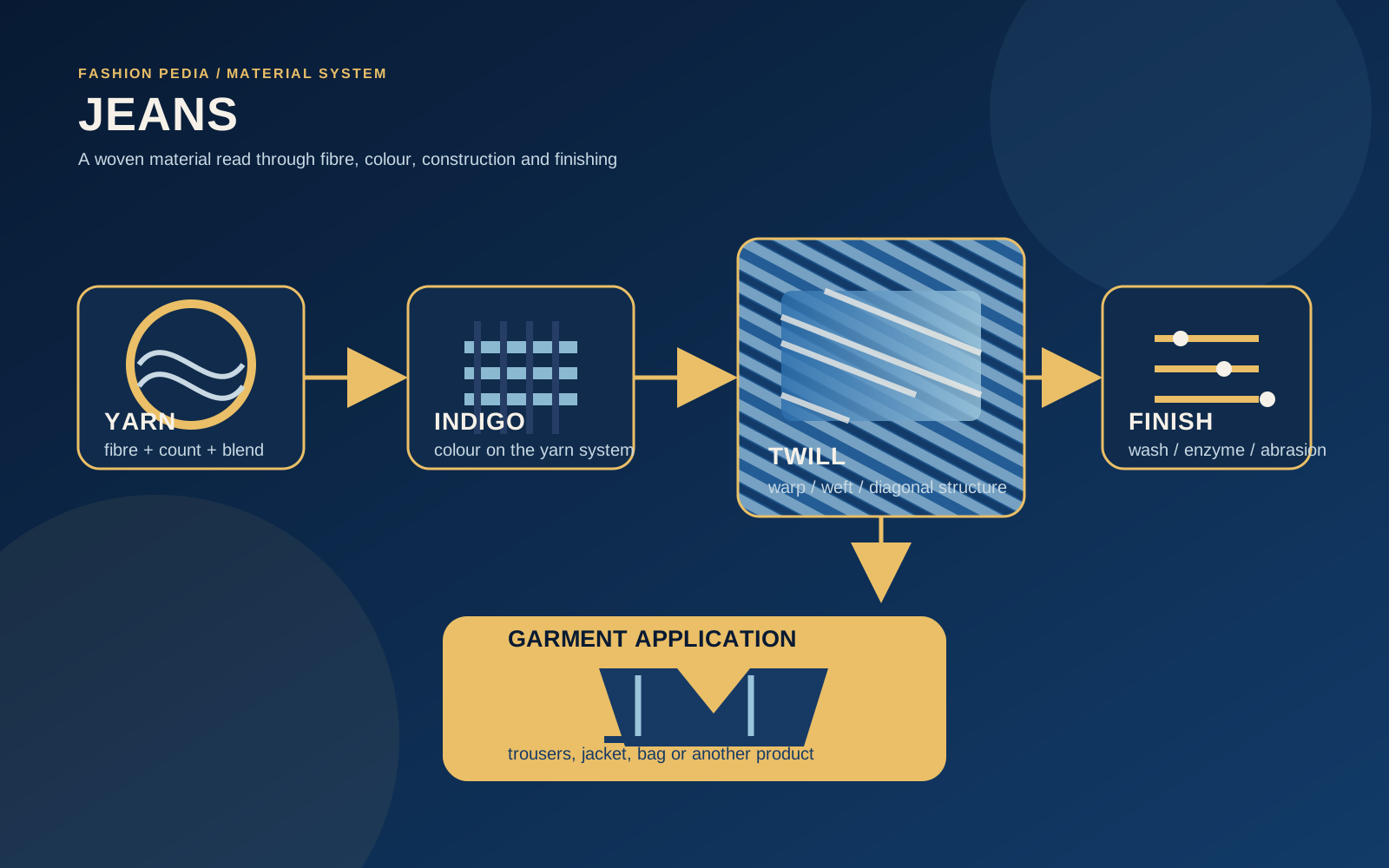
Jeans is a textile material based on denim, usually a woven twill in which yarn, indigo dye, construction and finishing shape the appearance and behaviour. Jeans names the material; trousers or a jacket are garments made from it.

Industrial weaving
Weaving is the process of forming fabric by regularly interlacing two yarn systems: warp in the lengthwise direction and weft across the width. The construction results from warp preparation, shed formation, weft insertion and beat-up, and control of yarn delivery and fabric take-up.
Fashion sourcing
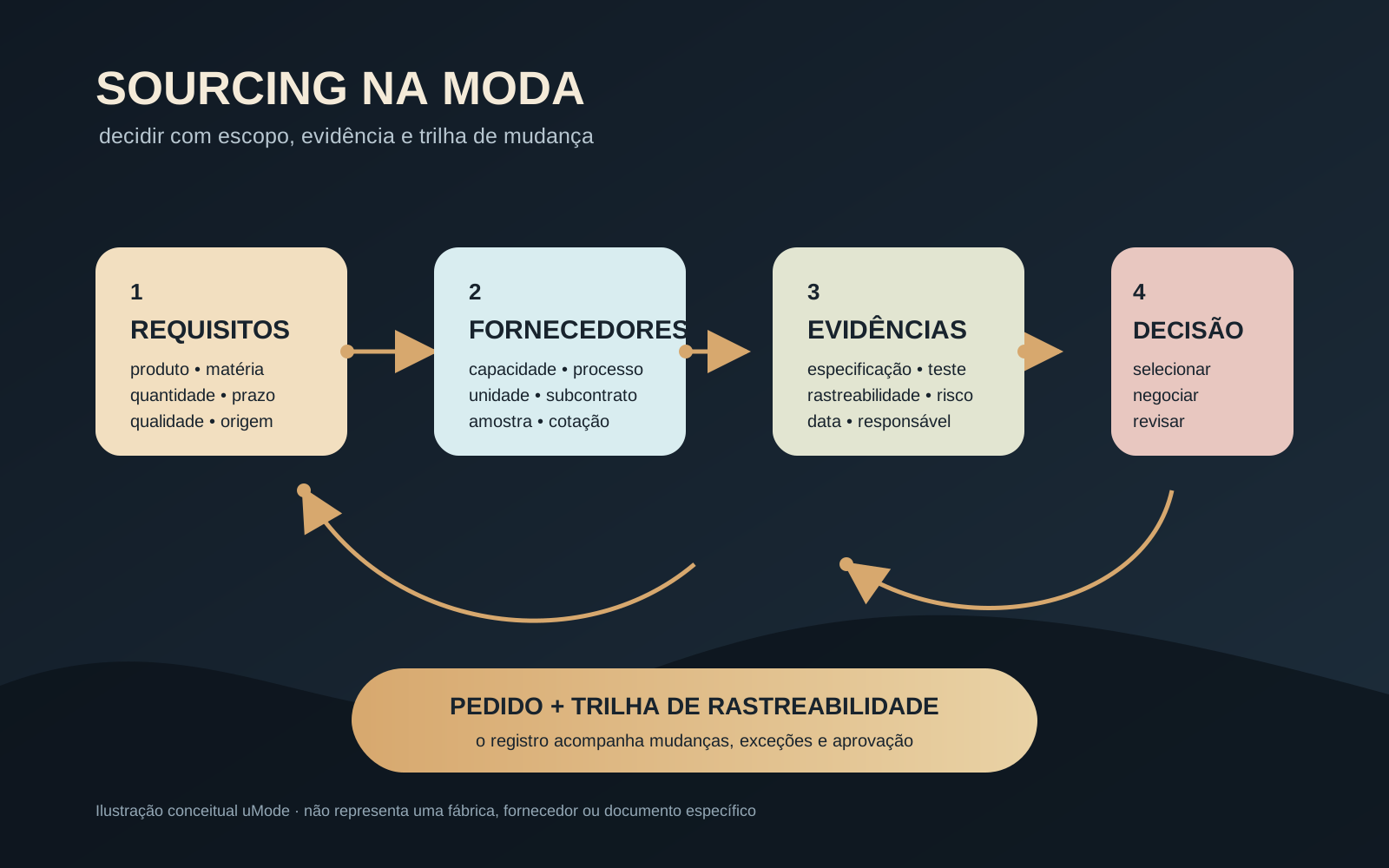
Fashion sourcing turns product requirements into a verifiable decision about materials, suppliers, capacity, cost, timing and risk. It connects samples, evidence and purchase orders without reducing supplier choice to the lowest price.
Sources
- https://r.jina.ai/http://cedro.com.br/quem-somos/
- https://r.jina.ai/http://cedro.com.br/jeanswear/
- https://r.jina.ai/http://cedro.com.br/workwear/
- https://www.gov.br/inmetro/pt-br/acesso-a-informacao/perguntas-frequentes/avaliacao-da-conformidade/produtos-texteis/o-que-a-medida-regulatoria-para-produtos-texteis-estabelece
- https://archive.nptel.ac.in/content/storage2/courses/116102005/m1-introduction/l1-introduction.htm
Want to apply this to your operation?