Alpargatas
Alpargatas is a global company founded and headquartered in Brazil, with an operation centered on footwear brands and international distribution. Its B2B profile combines Havaianas, multichannel reach, manufacturing scale, and a documented post-consumer rubber recovery program.
On this page
What is Alpargatas?
Alpargatas is a global company founded and headquartered in Brazil for more than 117 years. Its corporate history reaches back to 1907, when Robert Fraser and Ashworth & Co. founded Sociedade Anonyma Fábrica Brazileira de Alpargatas e Calçados in São Paulo. That origin separates the company from the footwear category called an alpargata and from any single product sold today.
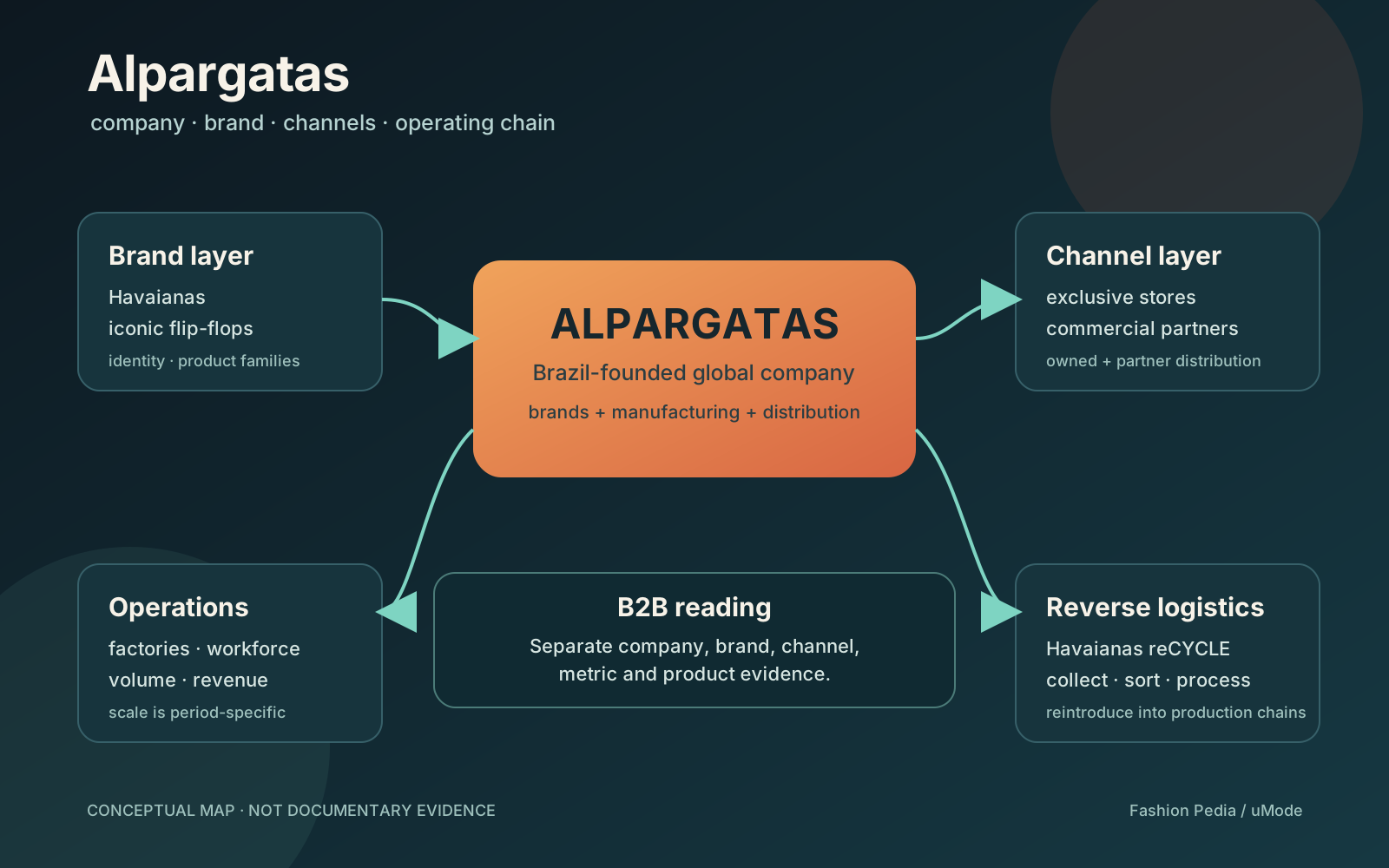
In fashion-supply-chain vocabulary, a B2B player is the business entity that coordinates brands, channels, and operating capacity. It is not synonymous with Havaianas or with fashion retail. The brand is one layer of the business; the company is the structure visible behind distribution and consolidated results.
How does the company connect brand, product, and market?
Alpargatas reports that it owns the brand known for iconic flip-flops associated with Brazilianness, comfort, and style since 1962. The same corporate presentation records Havaianas in 95% of Brazilian homes, more than 1,300 exclusive stores worldwide, and more than 350,000 points of sale in Brazil through commercial partners.
For sourcing, product development, and planning, these figures separate three decisions: brand identity, channel architecture, and distribution scale. An exclusive store and a partner point of sale are different channels; neither is automatic evidence of price, margin, lead time, or availability for a specific SKU. Product development should be read alongside the product specification, while collection management concerns dependencies among lines, calendars, and approvals.
What operating scale is documented?
In 2024, 226.6 million pairs of Havaianas footwear were sold, including 204.4 million pairs in Brazil, and the reported consolidated net revenue was R$4.1 billion. These figures describe the period and scope stated in the report; they do not establish the result of one collection, one channel, or one supplier.
The company also reports ending 2024 with 10,948 employees worldwide and three of its four factories in Brazil's Northeast region. For anyone mapping the footwear chain, this connects geography, workforce, and manufacturing without turning factory location into proof of origin for every product. A product specification is still needed for composition, construction, measurements, and finishing.
What does reCYCLE show about the operation?
Havaianas reCYCLE launched in 2020 as a reverse-logistics program to collect, sort, process, and reintroduce discarded flip-flops into new production chains. Collection points were installed in stores in more than 15 countries. The sequence matters for reverse logistics because it shows distinct steps: receiving waste, sorting, processing, and returning material to a production chain.
This case is not a general sustainability certification for the company or for every product. To assess recovered material, separate what the program states about waste flows from what a specification, audit, or product declaration would prove. The distinction also keeps reverse logistics separate from materials or technical performance.
Why does Alpargatas matter to B2B professionals?
Alpargatas brings together, in one public profile, a widely distributed brand, owned and partner channels, manufacturing, a workforce, and a post-consumer recovery flow. That combination makes the company a useful reference for investigating how product decisions reach channels and operations at scale. It does not establish leadership in every segment, superior quality, the efficiency of each factory, or commercial terms for a particular buyer.
The most useful reading is modular: company, brand, channel, volume, revenue, factory, and reverse logistics answer different questions. Tech pack, collection planning, and fashion buying can deepen operational questions, but they do not replace corporate documents that define period, unit, and metric.
Fashion Pedia · B2B player · Havaianas · footwear chain
Verified facts
- Alpargatas is a global company founded and headquartered in Brazil for more than 117 years.
Source: d3kciw669vsuxi.cloudfront.net ↗ - Alpargatas owns the brand known for iconic flip-flops associated with Brazilianness, comfort, and style since 1962.
Source: d3kciw669vsuxi.cloudfront.net ↗ - The company reports that the Havaianas brand is present in 95% of Brazilian homes.
Source: d3kciw669vsuxi.cloudfront.net ↗ - The operation reports more than 1,300 exclusive Havaianas stores worldwide.
Source: d3kciw669vsuxi.cloudfront.net ↗ - The operation reports more than 350,000 points of sale in Brazil through commercial partners.
Source: d3kciw669vsuxi.cloudfront.net ↗ - In 2024, 226.6 million pairs of Havaianas footwear were sold, including 204.4 million pairs in Brazil.
Source: d3kciw669vsuxi.cloudfront.net ↗ - The company reported consolidated net revenue of R$4.1 billion in 2024.
Source: d3kciw669vsuxi.cloudfront.net ↗ - Alpargatas launched the Havaianas reCYCLE reverse-logistics program in 2020 to collect, sort, process, and reintroduce discarded flip-flops into new production chains.
Source: d3kciw669vsuxi.cloudfront.net ↗ - Havaianas reCYCLE collection points were installed in stores in more than 15 countries.
Source: d3kciw669vsuxi.cloudfront.net ↗ - Alpargatas ended 2024 with 10,948 employees worldwide, and three of its four factories were in Brazil's Northeast region.
Source: d3kciw669vsuxi.cloudfront.net ↗ - Alpargatas' corporate history began in 1907, when Robert Fraser and Ashworth & Co. founded Sociedade Anonyma Fábrica Brazileira de Alpargatas e Calçados in São Paulo.
Source: fashionunited.com.br ↗
Sources
Want to apply this to your operation?