Brasil Eco Fashion Week
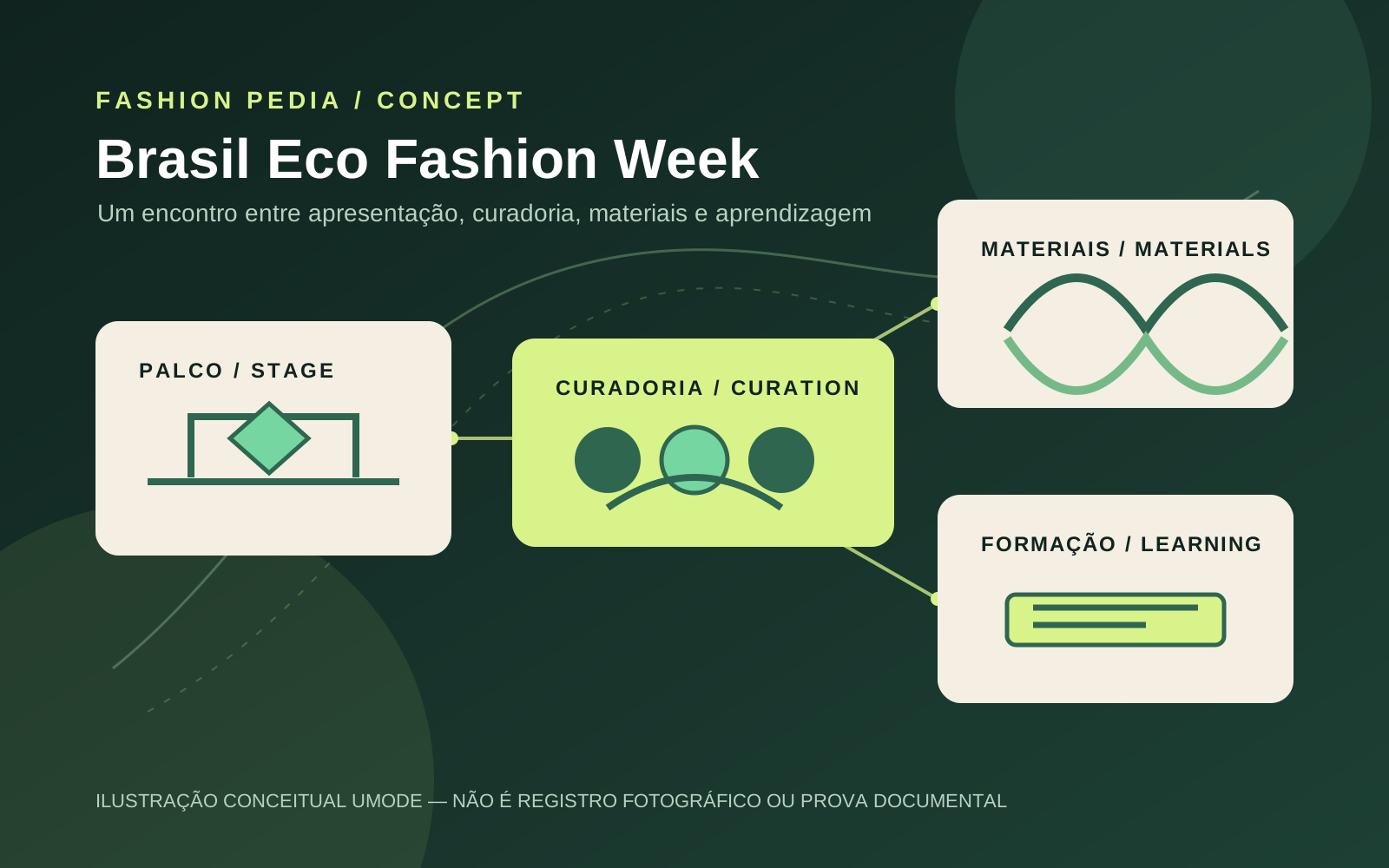
Brasil Eco Fashion Week (BEFW) is an annual sustainable-fashion event that, according to its organiser, brings education, runway shows, networking and entrepreneurship together in São Paulo, with free access open to the public. Its programme also includes a showroom, content sessions, material innovation and activities for entrepreneurs.
On this page
What is Brasil Eco Fashion Week?
Brasil Eco Fashion Week (BEFW) is an annual sustainable-fashion event that, according to its organiser, brings education, runway shows, networking and entrepreneurship together in a free environment open to the public. The Brasil Eco Fashion platform presents itself as connected to good practices in the fashion market and among industry brands, with a sustainability focus. That combination places sustainable fashion, product presentation, learning and business in one programme without turning participation into an environmental certification.
How is the event organised?
The programme creates several entry points into the fashion chain. The institutional page describes content, runway shows and business, with strands including innovation in products and materials, entrepreneurship activities and brand presentations. A historical page presents the 2017 edition through runway shows and backstage, talks and a showroom; this separates presentation, content and commercial display rather than treating “fashion week” as synonymous only with the catwalk.
Curation adds another layer. The historical source says that brands in the Runway Shows and Mercado Eco spaces were assessed by up to eight invited fashion and/or sustainability professionals. The criteria included environmental, social and cultural benefits addressed in the proposals. This design connects the event with fashion curation, upcycling, circular fashion and sustainable design, but it does not prove that every participant has the same performance or traceability.
Where and for whom does it take place?
The organiser says that the event became established in São Paulo and receives entrepreneurs, professionals, students and consumers from different parts of Brazil. Academic research at UFMG likewise describes BEFW as an annual, free fashion week in the city. In 2023, the platform recorded a conference immediately after the Amazon Summit, a connection that places debates about Amazonian fashion within the event’s repertoire without attributing measured environmental outcomes to the gathering.
Why does curation matter to the fashion chain?
Curation links a brand proposal, product language and public programming. For people working in product development, it raises concrete questions: what benefits are presented, how is design planned, which technology or material appears, and how does the brand communicate its characteristics? For fashion sourcing and research, an open call and selection process do not replace checks on composition, supply chain, certifications, testing or industrial performance.
The event’s value lies in the coexistence of stage, showroom, learning and debate. That setting makes it possible to observe how Brazilian fashion presents material alternatives, business models and cultural practices; it does not justify concluding that an exhibited solution is automatically circular, regenerative or lower impact. Historical pages also require temporal care: documentation of one São Paulo edition, or the 2023 conference’s link to the Amazon Summit, does not define the calendar, venue or format of every edition.
Relations
São Paulo Fashion Week · Minas Trend · circular fashion · upcycling · Amazonian fashion · Fashion Revolution
Verified facts
- Brasil Eco Fashion is a platform that promotes good practices in the fashion market and among brands in the industry, with a focus on sustainability attributes.
Source: web.archive.org ↗ - Brasil Eco Fashion Week brings together education, runway shows, networking and entrepreneurship annually in a free environment open to the public.
Source: web.archive.org ↗ - The event became established in São Paulo and receives entrepreneurs, professionals, students and consumers from all regions of Brazil.
Source: web.archive.org ↗ - In 2023, Brasil Eco Fashion Week held its conference immediately after the Amazon Summit.
Source: web.archive.org ↗ - The event accepts applications for its showroom and runway line-up through a public call.
Source: web.archive.org ↗ - Brands in the Runway Shows and Mercado Eco spaces are selected by an invited curation team of up to eight fashion and/or sustainability professionals.
Source: web.archive.org ↗ - The curation criteria include environmental, social and cultural benefits addressed in the brands' proposals.
Source: web.archive.org ↗ - The historical BEFW 2017 page presents runway shows and backstage, talks and a showroom as parts of the edition.
Source: web.archive.org ↗ - Academic research at UFMG describes BEFW as an annual and free fashion week held in São Paulo.
Source: repositorio.ufmg.br ↗
Related entries
São Paulo Fashion Week
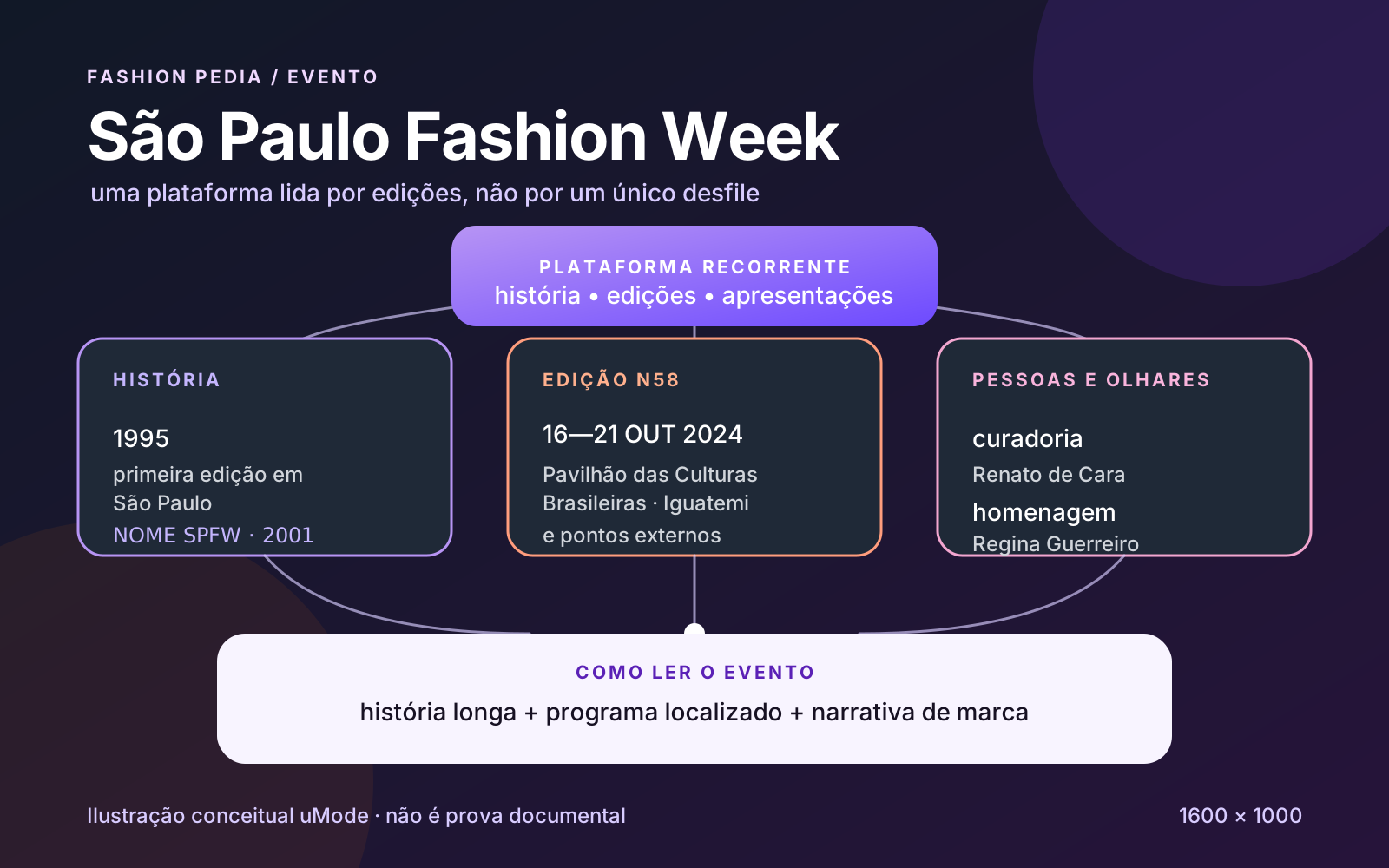
São Paulo Fashion Week (SPFW) is a Brazilian fashion event organised through editions, with a history that begins in 1995 and adopts the current name in 2001. SPFW N58 shows how one edition combines dates, venues, curation, an honouree and brand narratives without turning those details into permanent rules for the event.
Minas Trend
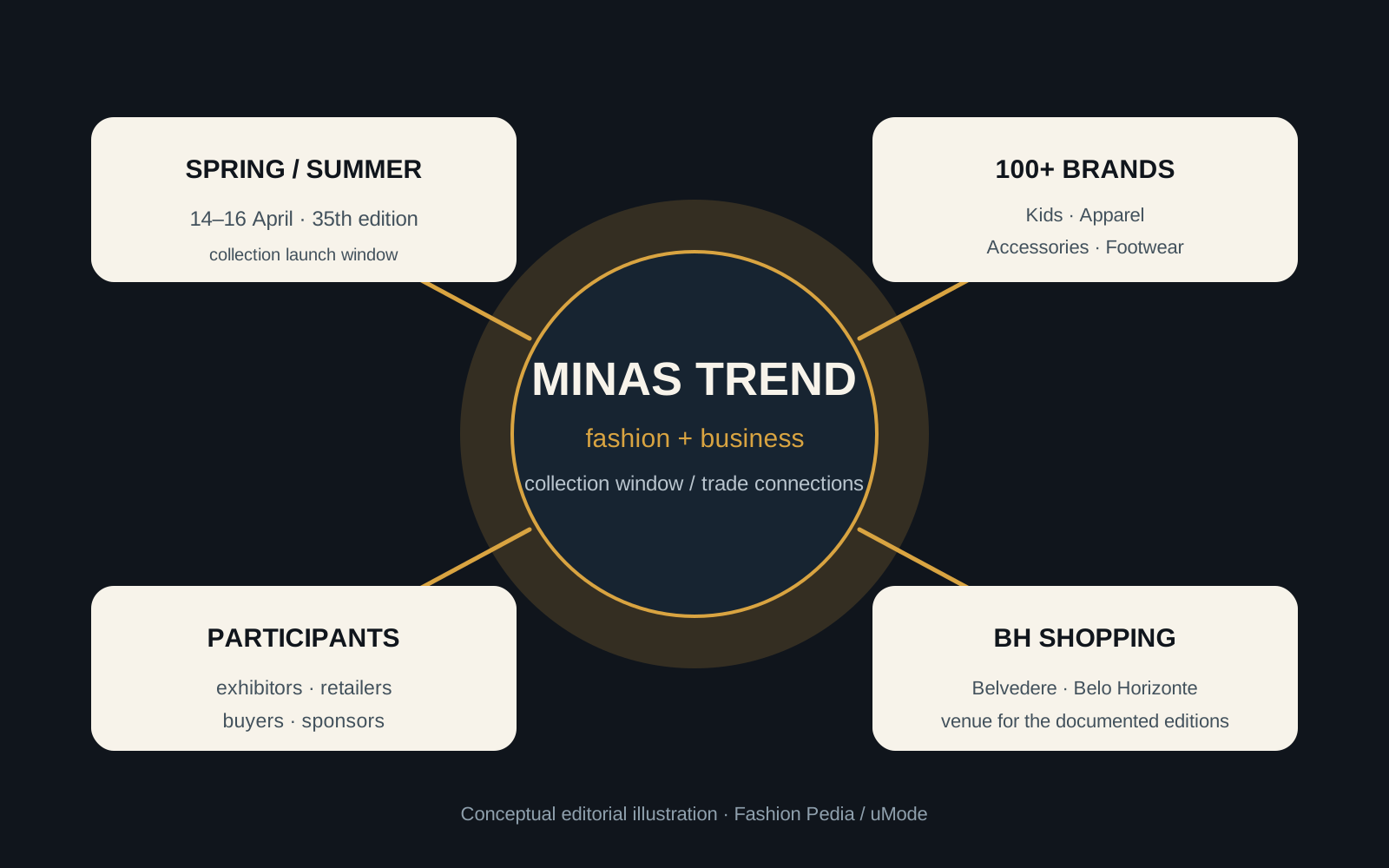
Minas Trend is a professional fashion event that brings brands, retailers, buyers and sponsors together around collection launches and trade activity. Its 35th edition was announced for 14–16 April at BH Shopping, with more than 100 brands across Kids, Apparel, Accessories and Footwear.
Sources
- https://web.archive.org/web/20240221044914/https://brasilecofashion.com.br/sobre/
- https://web.archive.org/web/20200804060449/https://brasilecofashion.com.br/a-curadoria/
- https://web.archive.org/web/20200804050742/https://brasilecofashion.com.br/befw-2017/
- https://repositorio.ufmg.br/server/api/core/bitstreams/65957eb1-2b02-4795-b209-0eecf1fc087a/content
Want to apply this to your operation?